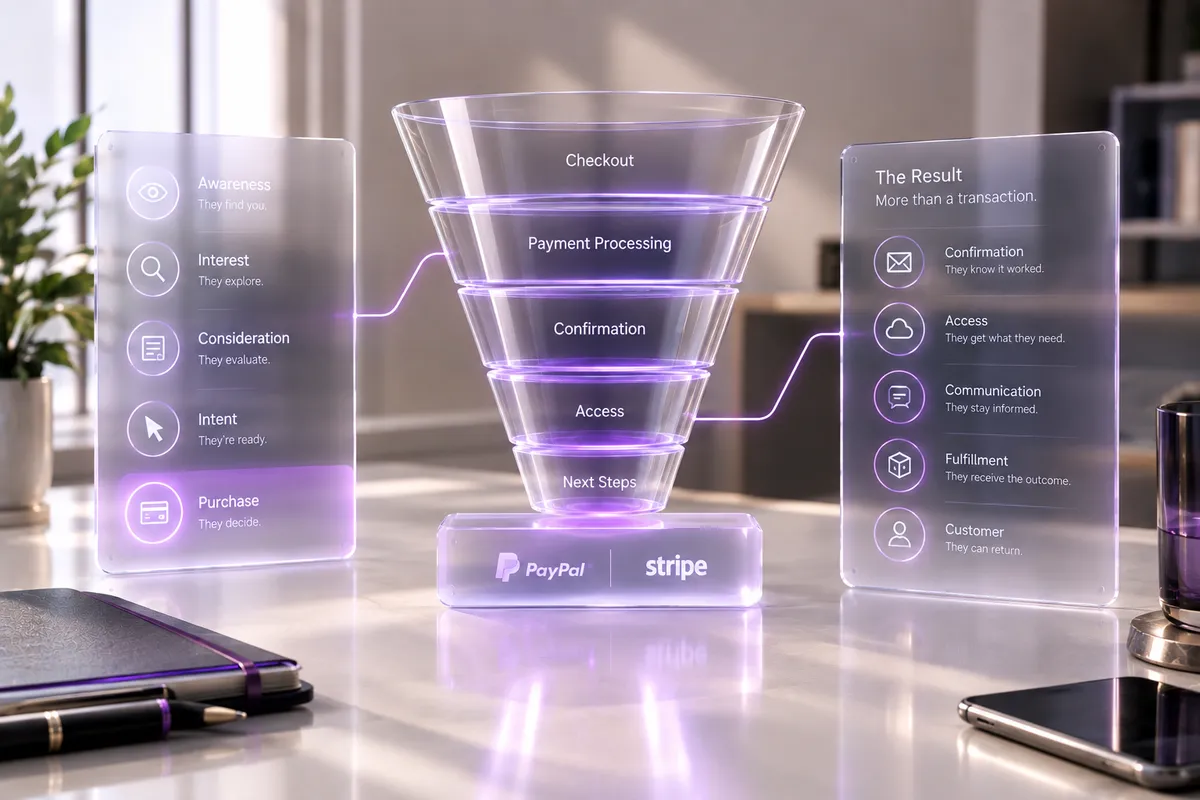
Why Payment Systems Affect Conversion More Than Copy
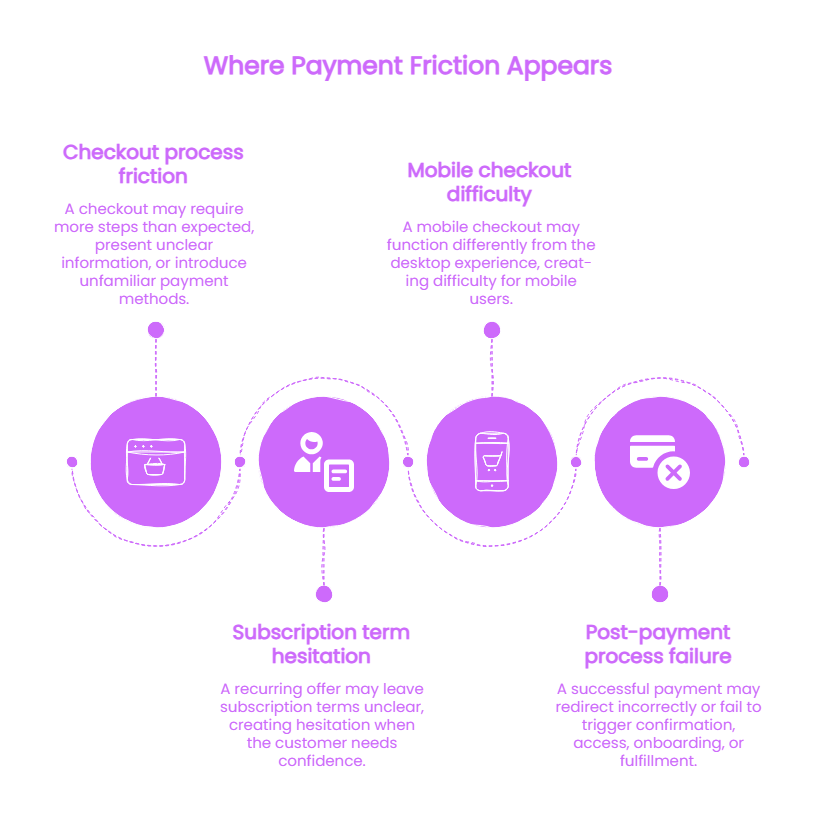
A business can spend weeks refining its messaging to persuade someone to buy, only to lose that person at the moment they are finally ready to act. The headline has been revised, the offer has been clarified, the objections have been addressed, and the call to action has made the next step clear. The prospect has moved through the funnel, reached the point of decision, and said yes. Then the checkout introduces an unexpected step, the payment page does not behave as expected, or the transaction fails to connect to what should happen next. At that point, the problem is no longer primarily about persuasion. The prospect may already be convinced; the transaction simply has to work. This is why payment infrastructure deserves attention when a business is evaluating conversion.
Conversion Is a Journey, not a Button
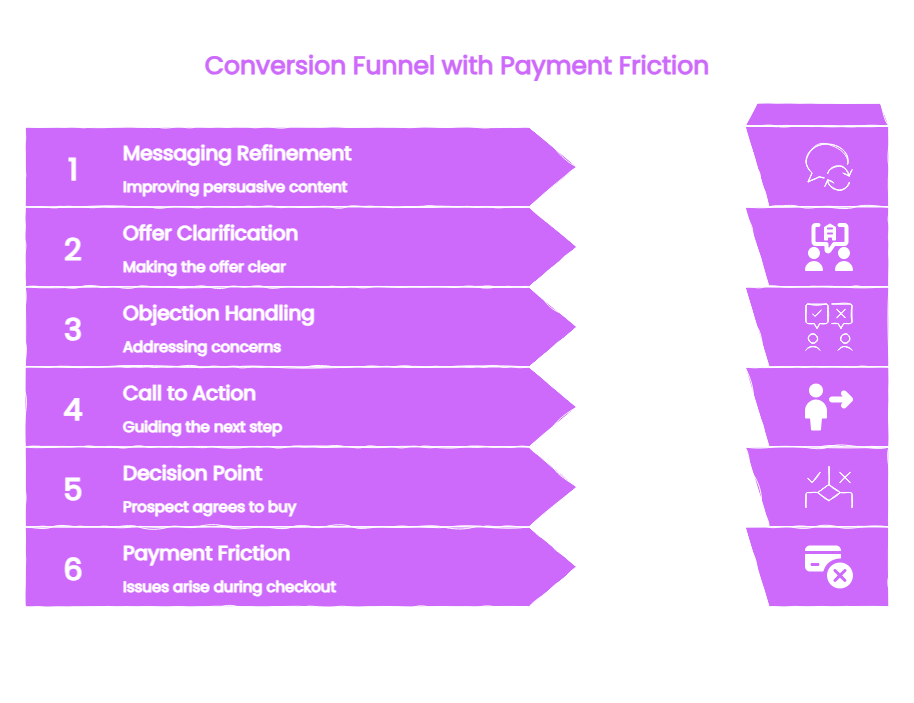
Conversion is often represented as the moment someone clicks a button or submits payment. That moment matters, but it sits within a longer sequence of movement that begins before the transaction and continues after it. A funnel may create desire by helping someone recognize a relevant problem or opportunity. It may create understanding by explaining the offer, trust by establishing credibility, readiness by giving the person enough context to make a meaningful decision, and intent by directing them toward a specific action. All of that work can happen successfully before the customer ever reaches the payment stage. The transaction then becomes the point where intention has to become a completed business event.
This distinction matters because a person can be ready to purchase while still encountering friction during the transaction. Someone may understand the offer completely and trust the business completely, yet abandon the process because checkout is confusing or something does not function correctly. Someone may click the purchase button with clear intent and then encounter a payment failure, an unexpected redirect, or uncertainty about what happens after payment. The funnel has therefore moved the person successfully toward conversion, but the transaction layer has interrupted the movement. Looking only at the final conversion number can hide where that interruption occurred. A useful conversion analysis therefore considers the entire path from decision through completed transaction and the expected next step.
Where Payment Friction Appears
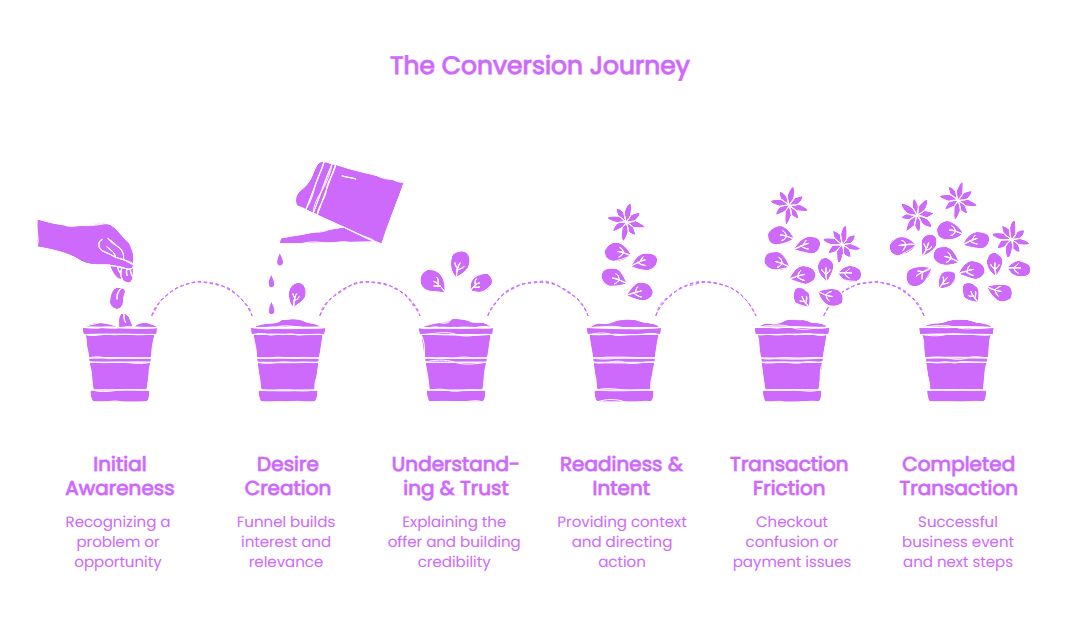
Payment friction can appear in places that seem small when examined individually. A checkout may require more steps than the customer expected, present information in an unclear order, or introduce a payment method that feels unfamiliar to the buyer. A recurring offer may leave subscription terms unclear, creating hesitation at the exact point where the customer needs confidence about what they are agreeing to. A mobile checkout may function differently from the desktop experience, creating difficulty for someone who is ready to complete the purchase from their phone. A successful payment may also redirect incorrectly or fail to trigger the confirmation, access, onboarding, or fulfillment process the customer expects.
These conditions matter because the customer experiences the transaction as part of one continuous relationship with the business. They do not necessarily distinguish between the sales page, checkout platform, payment processor, automation system, and fulfillment system. They simply experience whether the purchase was easy to complete and whether the business responded appropriately afterward. A broken redirect can therefore feel like a business problem even when the payment itself succeeded. Missing confirmation can create uncertainty even when the transaction was recorded correctly. A payment to access disconnect can create support requests that would never have existed if the transaction had been connected properly to the next stage.
Friction Can Happen After Persuasion Has Succeeded
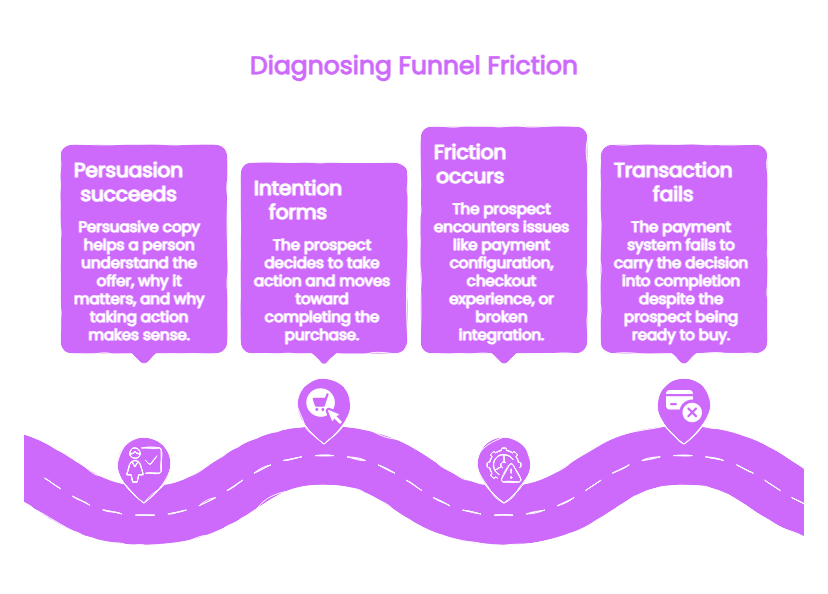
One of the most important distinctions in funnel diagnosis is recognizing that persuasion and transaction are different functions. Persuasive copy helps a person understand what is being offered, why it matters, whether it fits their situation, and why taking action makes sense. The payment system provides the environment through which that decision becomes a transaction. These functions depend on each other, but they solve different problems. A person does not necessarily abandon because the offer failed to persuade them simply because they did not complete the purchase. They may have been persuaded and then encountered friction somewhere between intention and completion. The business needs to determine which layer actually interrupted the movement before deciding what to change.
This is particularly important because rewriting copy is often easier to see and easier to do than investigating infrastructure. Changing a headline feels like progress because the change is visible. Reworking an offer statement can feel productive because the business can immediately point to something that has been improved. But if the real issue is a payment configuration, checkout experience, failed transaction, broken integration, or missing post-purchase action, additional persuasion will not solve the underlying problem. The business can end up improving copy for a prospect who was already ready to buy while leaving the actual point of friction untouched. More persuasion cannot compensate for a transaction that cannot reliably carry a decision into completion.
Why Better Copy Cannot Fix Transaction Friction
Copy can perform important work at the transaction stage. It can clarify what the customer is purchasing, establish expectations around price and payment, explain what happens next, identify who the offer is intended for, and reduce uncertainty about the decision. Clear checkout language can absolutely support a smoother purchase experience. But copy operates within the conditions created by the transaction environment. It cannot make a failed payment process succeed, restore a broken integration, correct an incorrect access trigger, or repair a redirect that sends the customer to the wrong place. It can explain the next step, but the system still has to perform the next step.
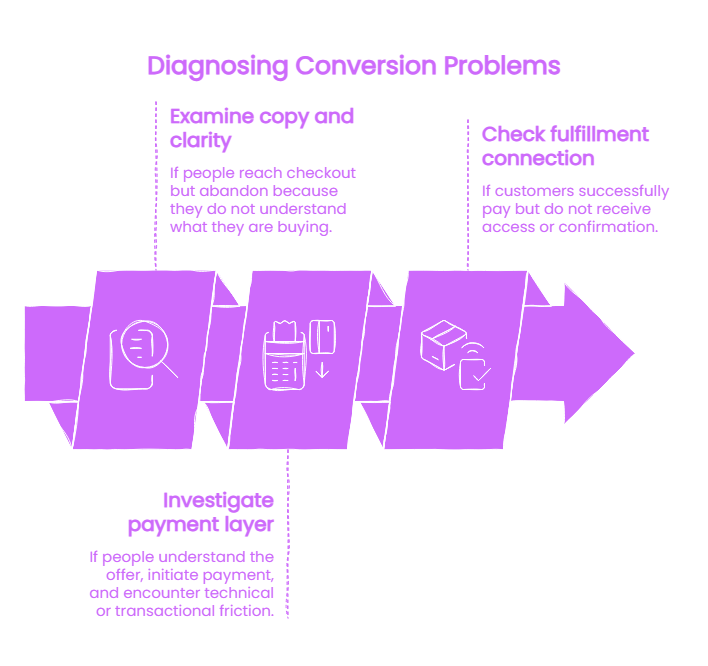
This gives businesses a more precise way to think about conversion problems. If people are reaching the checkout but consistently abandoning because they do not understand what they are buying, copy and offer clarity deserve examination. If people understand the offer, initiate payment, and encounter technical or transactional friction, the investigation needs to move toward the payment layer. If customers successfully pay but do not receive access or confirmation, the problem may sit in the connection between payment and fulfillment rather than in either the sales copy or the offer itself. The same conversion number can therefore point toward very different causes depending on where the movement breaks. Diagnosis has to come before correction.
The Economics of Transaction Friction
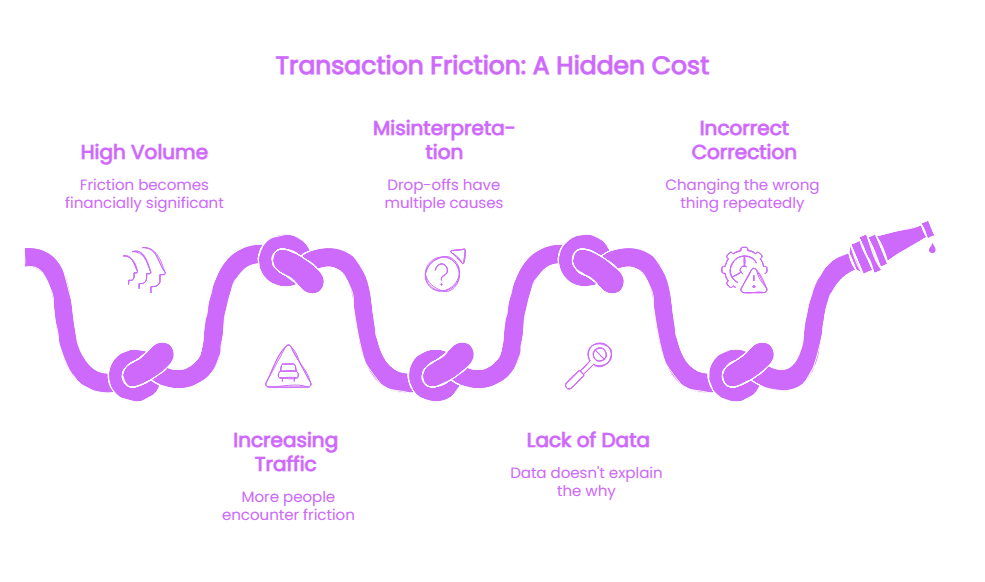
Small points of friction can become financially significant when they occur at volume. Imagine a business sending one hundred qualified prospects to a checkout page and losing only a small percentage because of transaction friction. The individual losses may appear minor when viewed one at a time, but repeated across campaigns, launches, or an ongoing funnel, those missed transactions accumulate. The impact becomes even more meaningful as traffic increases because the business is sending more people into the same point of friction. Increasing traffic without resolving a transaction problem can therefore increase the number of people encountering the problem rather than improving the underlying conversion path.
This is why businesses need to resist treating every checkout drop off as evidence that the offer needs stronger persuasion. A drop off can reflect price, readiness, offer fit, messaging, traffic quality, or a genuine lack of desire to purchase. It can also reflect payment friction, technical failure, unclear terms, or an experience that becomes less trustworthy at the transaction stage. The data can tell you that movement changed, but the data alone does not always tell you why. The correct response is to examine what the customer actually experienced at that point in the journey. Once the source of friction is identified, the business can make the correction at the appropriate layer instead of repeatedly changing the wrong thing.
The Difference Between Purchase Intent and Purchase Completion
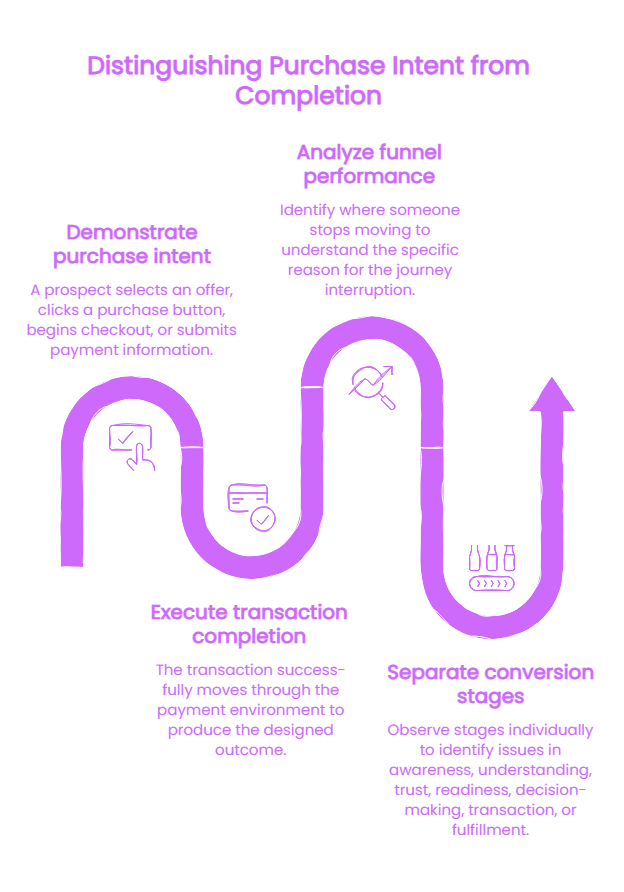
Purchase intent and purchase completion are closely related, but they are not the same event. A prospect can demonstrate strong intent by selecting an offer, clicking a purchase button, beginning checkout, or submitting payment information. Completion requires the transaction to successfully move through the payment environment and produce the outcome the business has designed around that purchase. This distinction becomes especially important when analyzing funnel performance because the place where someone stops moving contains information about the journey. Someone who never reaches the checkout may have a different reason for stopping than someone who reaches checkout and encounters a payment failure. Someone who pays successfully but never receives access has completed the financial transaction while experiencing a failure in the larger customer journey.
The business therefore benefits from separating these stages rather than collapsing them into one conversion number. The more precisely the journey is observed, the easier it becomes to identify whether the issue belongs to awareness, understanding, trust, readiness, decision making, transaction, or post purchase fulfillment. This does not require a complicated analytics environment to begin thinking correctly about the problem. It requires the business to understand what each meaningful stage is supposed to accomplish. Once the intended movement is clear, unusual behavior becomes easier to investigate. The goal is not to measure everything simply because measurement is available; it is to know what the available evidence actually represents.
Test the Last Three Feet
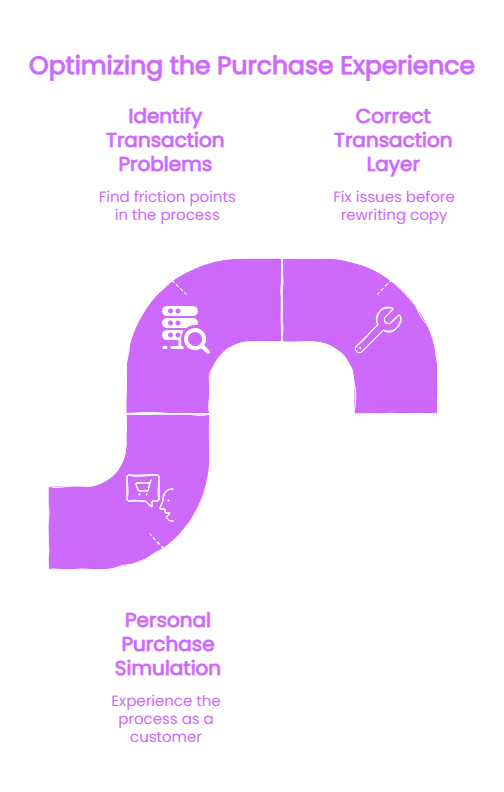
Take one of your existing offers and personally move through the purchase process as though you were a customer who has already decided to buy. Begin where the decision becomes clear and follow the journey all the way through checkout, payment, confirmation, access, and whatever happens immediately afterward. Do not begin by asking whether the checkout looks attractive or whether the copy sounds persuasive. Begin with a simpler question. What does the customer experience from the moment they decide to buy until they know exactly what happens next? Pay attention to every transition, including what the customer sees, what information they have to provide, what systems respond, and whether the next step is obvious. The purpose is to experience the transaction as a customer rather than inspect it only as the business owner.
Then examine what happens when the ideal path does not occur. Test or review what happens when payment fails, when someone exits and returns, when a transaction succeeds, when a customer needs a receipt, or when access depends on a separate system. Look for places where the customer would have to guess, wait, contact the business, or repeat information that the systems should already know. If you find a genuine transaction problem, correct the transaction layer before rewriting the sales message. If the transaction functions correctly but customers are still hesitating before payment, then the investigation can move upstream toward offer clarity, messaging, readiness, or positioning. The goal is not to protect the copy from criticism or blame the payment system by default. The goal is to identify the layer where movement is actually breaking.
What to Fix First
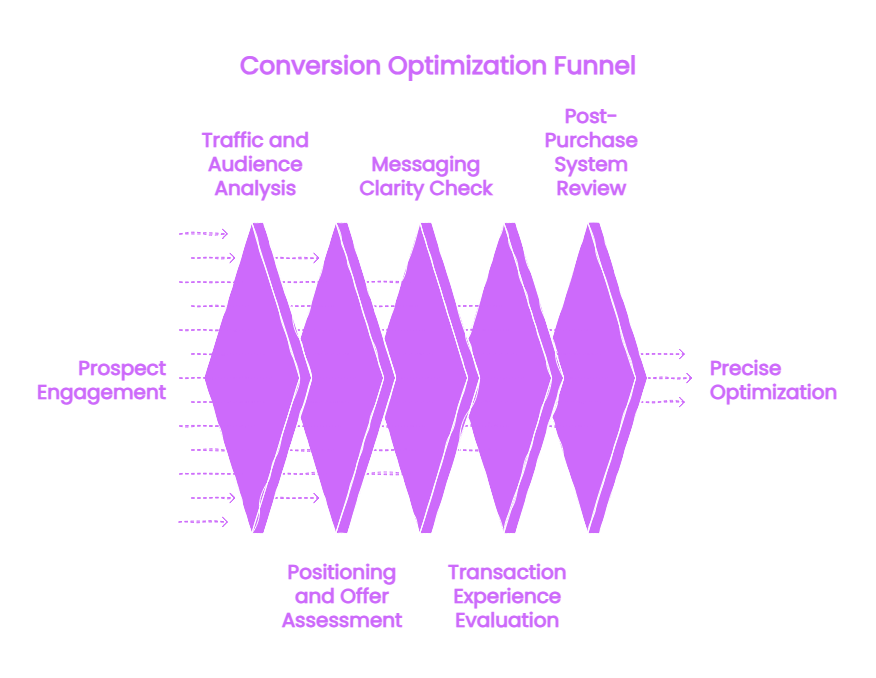
When conversion is lower than expected, begin by locating the point at which meaningful movement changes. If prospects are not engaging with the offer, investigate the traffic, audience, positioning, offer, or messaging conditions surrounding that stage. If prospects engage deeply and reach checkout but fail to complete the transaction, examine the transaction experience before assuming the entire offer needs to be rewritten. If payment succeeds but the customer journey breaks afterward, investigate the systems responsible for confirmation, access, communication, and fulfillment. Each of these conditions creates a different kind of work. Treating them all as copy problems creates unnecessary changes while leaving the actual source of friction intact.
This approach also protects a business from constantly rewriting language that is already performing its intended function. Copy should be improved when the copy is creating confusion, failing to establish value, introducing inaccurate expectations, or leaving important questions unanswered. Payment infrastructure should be improved when the transaction itself is introducing unnecessary difficulty or failing to communicate correctly with the systems around it. The two layers work together, but they should remain distinguishable enough to diagnose. A business that understands that distinction can make more precise changes. Precision matters because every unnecessary change creates another variable in the funnel, making it harder to determine what actually improved the result.
Closing
Copy can move someone toward a decision, but the payment system has to carry that decision into a completed transaction. The prospect may have already developed desire, understanding, trust, readiness, and intent before they ever reach the checkout. At that point, the business needs infrastructure that allows the decision to become action without introducing unnecessary friction. The transaction needs to process correctly, the customer needs to understand what has happened, and the systems surrounding the payment need to respond appropriately. When those conditions are present, payment becomes a continuation of the customer journey rather than an interruption to it. When they are absent, the funnel can lose customers even when the persuasive work upstream has succeeded.
This is why payment systems deserve a place in conversion strategy. The answer to a conversion problem is not always more copy, more persuasion, or another revision of the sales page. Sometimes the business needs to examine what happens in the final stretch between “I want this” and “my purchase is complete.” That stretch carries real business consequences, and it deserves to be designed with the same care given to the rest of the funnel. Conversion does not end when persuasion succeeds. It ends when the intended transaction and next step occur correctly.
Persuasion isn't the layer that's failing here, the transaction might be. Plug Club is where you build the checkout, confirmation, access, and follow up systems so a yes actually completes, instead of losing people in the last three feet. Join Plug Club