Why Luxury Requires Fewer Funnels, Not More
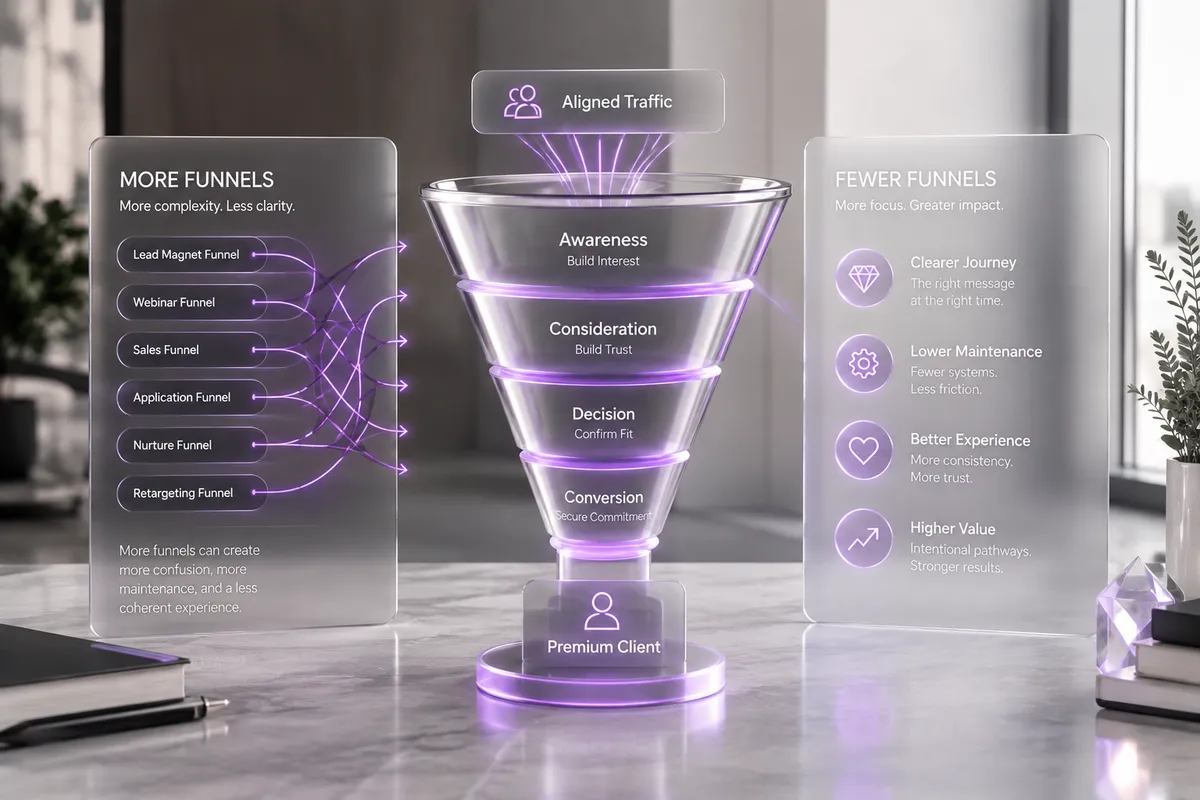
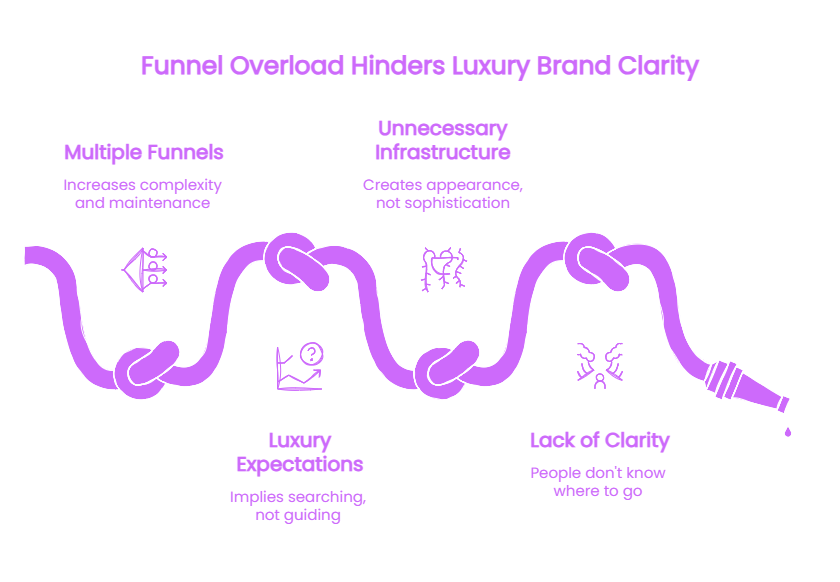
A funnel underperforms, and the instinct is often to build another one. Add another lead magnet. Create another nurture sequence. Launch a webinar. Introduce another offer. Build another pathway for the people who did not respond to the first pathway. Before long, the business has multiple funnels directing people toward multiple offers through multiple sequences, all requiring their own copy, automation, maintenance, analytics, and attention. The growing infrastructure can create the appearance of sophistication because there is visibly more happening. Yet a business can become increasingly complex while becoming less clear about where people should actually go. More infrastructure does not automatically create more sophistication.
The assumption becomes especially important for businesses positioned as luxury. Luxury carries an expectation of intentionality, discernment, refinement, and considered experience. When every perceived gap in performance produces another funnel, the business can unintentionally communicate that it is still searching for the right path rather than confidently guiding people through an established one. The answer to underperformance may sometimes require a new pathway, but it may also require greater clarity within the pathway that already exists. A new funnel should therefore have a reason grounded in the business rather than a reason grounded in the desire to create more marketing activity. The more important question is not how much funnel infrastructure can be built. It is how much infrastructure the business actually needs to guide the right people through the right journey.
What Luxury Actually Needs From a Funnel
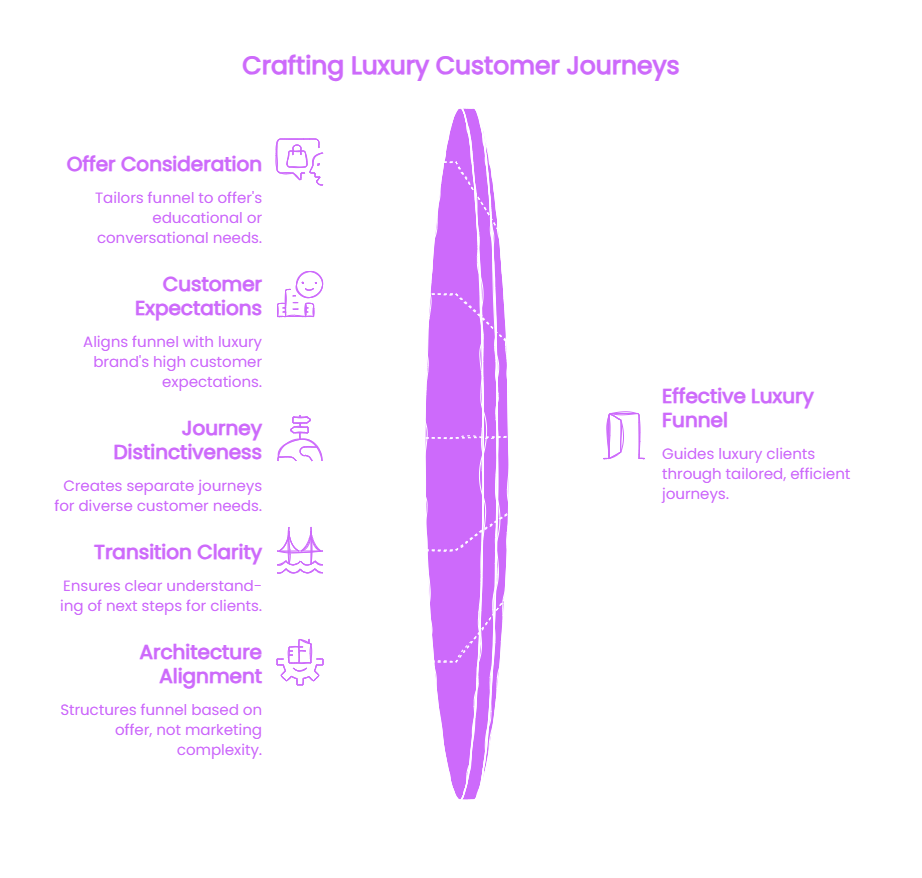
A funnel exists to guide movement. For a luxury positioned business, that movement needs to reflect the level of consideration required by the offer and the expectations established by the business. Some offers require education before a decision, while others require a direct conversation, an application, a consultation, or another form of qualification. The funnel should provide the appropriate progression between those points rather than manufacture additional activity simply because additional activity appears sophisticated. Each stage should have a reason for existing within the customer journey. Each transition should help the prospective client understand what they are considering and what becomes available to them next. The architecture should therefore follow the nature of the offer rather than forcing the offer into an increasingly elaborate marketing system.
This changes the question businesses ask about their funnel architecture. Instead of asking, “How many funnels can this business have?” ask, “How many distinct journeys does this business actually need?” A distinct journey exists when the person entering the business has a meaningfully different path based on the offer, audience, readiness, decision mechanism, or required experience. A separate funnel can be useful when that difference genuinely changes what the person needs to understand or do next. When the underlying journey remains substantially the same, another funnel may simply divide an experience that could have remained coherent. The objective is not to reduce funnel count for the sake of having fewer funnels. The objective is to ensure that every pathway corresponds to something real within the business.
Why More Funnels Create More Operational Weight
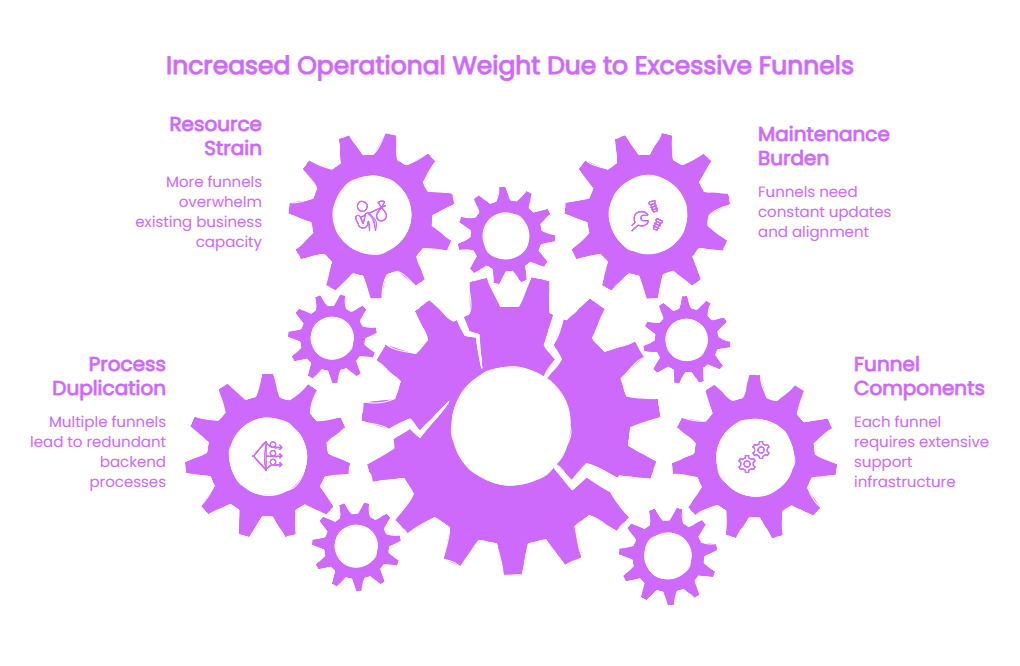
Every funnel creates responsibility beyond the visible pages. A funnel requires messaging that accurately represents its purpose, pages that support the intended movement, automation that delivers the right communication, segmentation that distinguishes relevant audiences or behaviors, and follow-up that carries the person toward the appropriate next step. It may also depend on payment systems, scheduling tools, email platforms, CRM records, analytics, integrations, tracking, testing, and ongoing maintenance. Once a funnel exists, it becomes part of the business's operating environment. It has to remain accurate as offers change, links move, messaging evolves, and customer behavior provides new information. The infrastructure therefore carries a continuing cost in attention even when the funnel appears to be running quietly in the background.
This is why funnel quantity is an operational decision, not merely a marketing decision. Building another funnel increases the number of things the business must understand, monitor, maintain, and keep aligned. If the business owner is already struggling to maintain one customer journey, adding three more does not automatically create additional capacity. It can multiply the number of places where messaging, automation, expectations, and fulfillment can drift apart. The issue becomes even more significant when multiple funnels eventually lead into the same offer or require substantially the same backend process. In those circumstances, the business may be carrying several front end pathways to produce one underlying movement. Sophistication requires the capacity to support what has been built, not simply the ability to build more.
The Difference Between Necessary Complexity and Manufactured Complexity
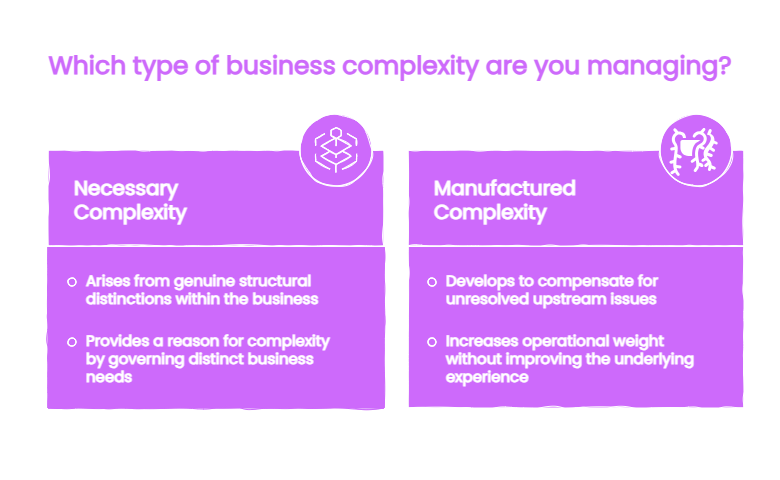
Complexity can be appropriate when the business itself contains meaningful distinctions. A company with several substantially different offers may need different customer journeys because each offer requires a different level of education, qualification, commitment, or fulfillment. Different audiences may also require different entry points when their context changes the information or progression they need. A business serving several readiness levels may intentionally create separate pathways so that someone who is discovering the problem receives a different experience from someone prepared to make a significant investment. In these circumstances, multiple funnels can represent genuine structural distinctions within the business. The complexity exists because the business has something different to govern.
Manufactured complexity develops when additional architecture is introduced to compensate for something that has not been resolved upstream. A business may create another lead magnet because the existing offer has not been clearly positioned. It may create another nurture sequence because the original customer journey does not establish sufficient clarity. It may introduce another offer because the existing offer has not been sufficiently understood or supported. It may build another funnel because the current funnel feels disappointing without first determining whether the issue comes from traffic, messaging, offer readiness, positioning, or the actual customer journey. In these situations, additional infrastructure can make the business busier without making the underlying experience clearer. The distinction matters because structural necessity gives complexity a reason, while accumulation gives complexity only a growing footprint.
When One Funnel Can Carry More
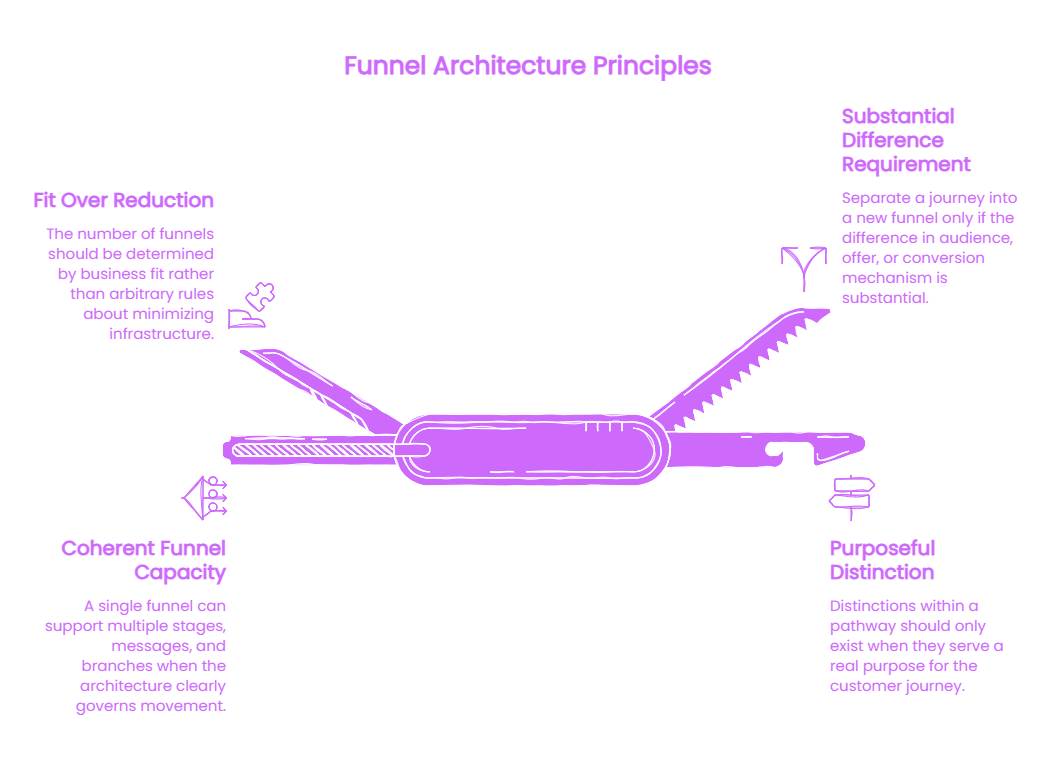
A coherent funnel can often support more movement than businesses initially assume. One customer journey may introduce an offer, provide the necessary context, establish trust, address relevant questions, and guide the person toward a decision without requiring a separate funnel for every stage. The same pathway can contain different messages, branches, or follow up conditions when those distinctions serve a real purpose. What matters is whether the architecture can clearly govern the movement taking place within it. A funnel does not become more sophisticated because every stage receives its own isolated infrastructure. It becomes more useful when the structure accurately carries the journey the business actually needs.
This also means that fewer funnels should never become another arbitrary business rule. One funnel may be entirely appropriate for one business and completely insufficient for another. A business with multiple offers, audiences, or conversion mechanisms may need several distinct pathways to preserve clarity. The governing principle is therefore fit rather than reduction. Before separating a journey into another funnel, examine whether the difference is substantial enough to require its own architecture. If the same audience is moving toward the same offer through essentially the same decision process, the existing funnel may have more capacity than the business has recognized. Sometimes the most sophisticated move is not adding infrastructure, but allowing a well-designed structure to carry more of what it was already built to do.
Luxury, Restraint, and Operational Capacity
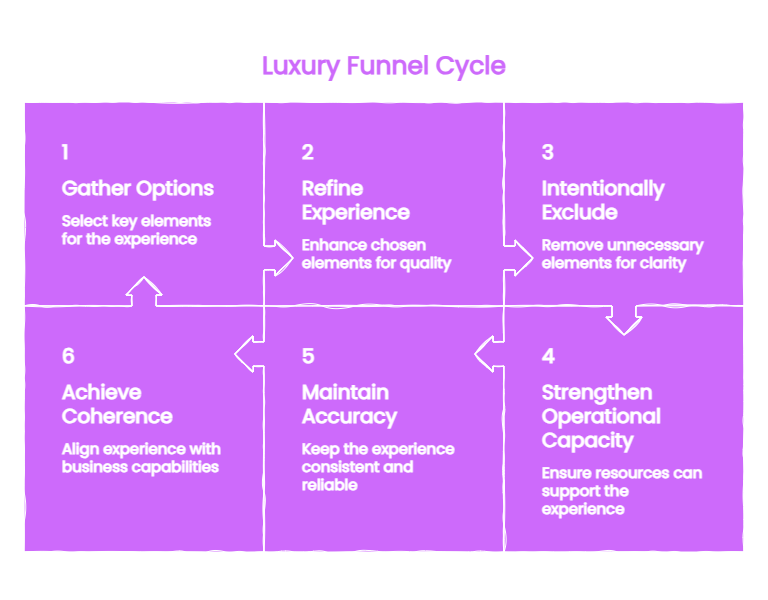
Luxury has a relationship with restraint because discernment requires selection. A luxury experience does not need every available option presented simply because those options exist. The experience is shaped through what has been chosen, what has been refined, and what has been intentionally left out. That principle can extend into funnel architecture. A business that knows what it offers, whom it serves, how people enter, what they need to understand, and where they should go next may have less reason to create multiple competing pathways. Its clarity reduces the need for infrastructure to compensate for uncertainty.
Operational capacity strengthens this relationship between luxury and restraint. Every system the business creates has to be carried by people, technology, processes, attention, and resources. When the infrastructure exceeds the business's capacity to maintain it, the experience can become fragmented even when the architecture looks impressive from the outside. Broken links, outdated messaging, neglected sequences, conflicting calls to action, duplicate follow up, and unclear handoffs can all emerge from an ecosystem that has grown beyond its ability to govern itself. A restrained funnel environment gives the business greater opportunity to maintain accuracy across the experience. The result is not simply fewer assets. It is greater coherence between what the business has established and what it can consistently support.
Count What Your Business Actually Needs
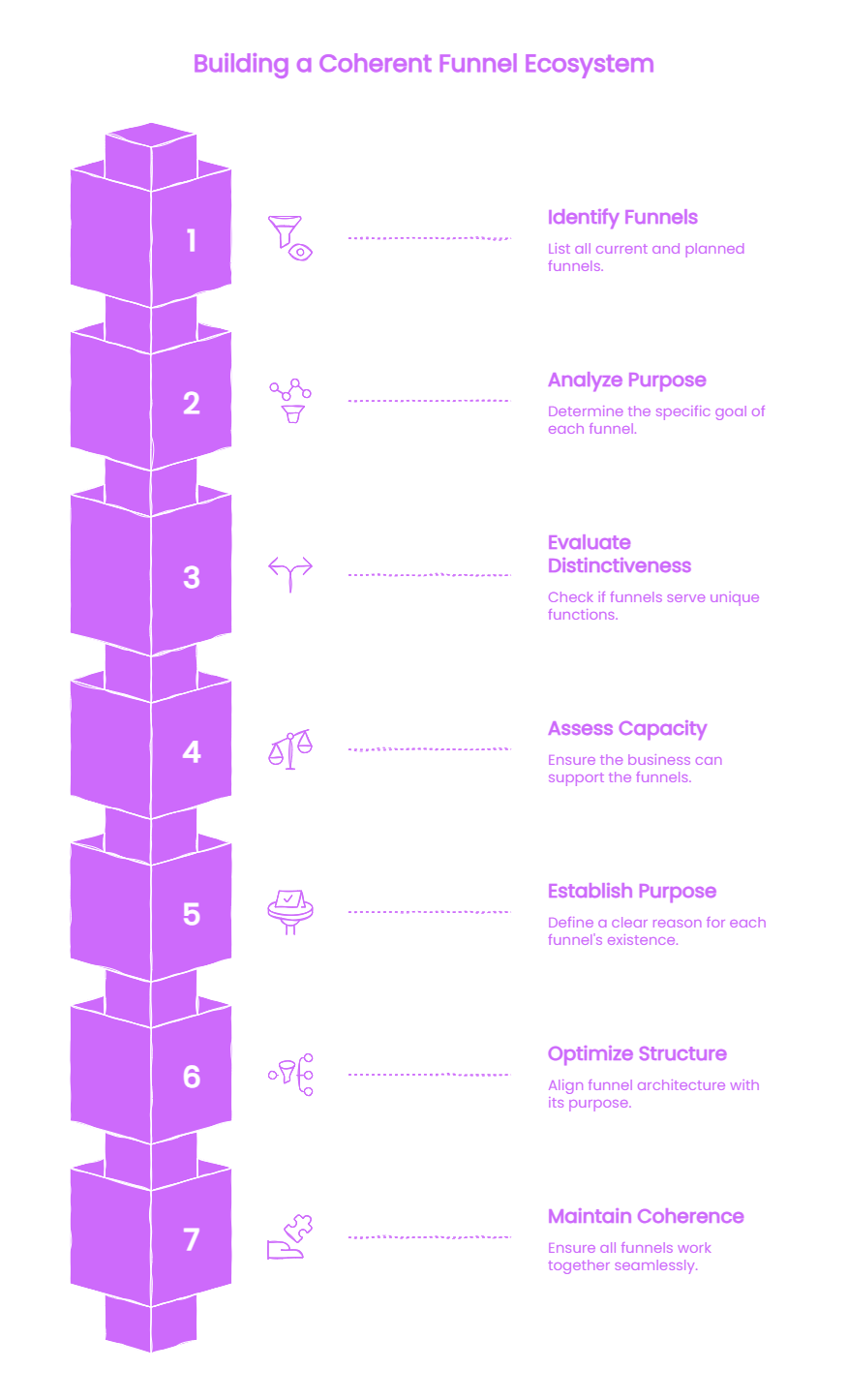
Take every funnel currently operating in your business and every funnel you are considering building, then examine what each one actually governs. Start with the purpose of the pathway rather than the technology behind it. Identify the offer it supports, the audience it serves, the decision it guides, and the movement that happens from entry to outcome. Then ask whether that movement is genuinely distinct from the movement governed by another funnel. Two funnels may have different names, lead magnets, pages, or automations while ultimately directing essentially the same person toward essentially the same decision. That similarity gives you something important to investigate before investing in additional architecture.
The goal of this review is not to delete funnels simply because you have several. It is to establish a defined reason for every funnel to exist. If a funnel serves a distinct business function, preserve the distinction and make sure the supporting infrastructure can carry it. If two pathways appear substantially similar, examine whether the separation creates meaningful clarity or simply adds another layer to maintain. Then look at your own capacity and ask whether the business can consistently support everything it has built. The strongest funnel ecosystem is the one in which every pathway has a purpose, every purpose has an appropriate structure, and the business has the capacity to keep that structure coherent.
Closing
A sophisticated funnel ecosystem is not defined by quantity. It is defined by fit, purpose, coherence, and the business's ability to support what it has built. Multiple funnels can be appropriate when the business contains multiple journeys that genuinely require different forms of guidance. A single funnel can be equally sophisticated when it carries a clearly defined journey with enough structure to support the decisions taking place within it. The number of funnels therefore tells you very little about the maturity of the business by itself. What matters is whether the architecture reflects the reality of the business and creates an experience that people can move through with clarity.
Luxury requires intentionality at every layer. That includes knowing when another pathway creates meaningful distinction and when it simply creates another system to maintain. More infrastructure can create more capacity when it corresponds to something the business actually needs. It can also create more weight when it is introduced to solve a problem that belongs somewhere else. The most refined funnel architecture is therefore the architecture that knows why it exists. When the business has clarity, authority, a defined customer journey, and the operational capacity to support them, restraint can become one of its strongest forms of sophistication.
Knowing what your business actually needs and building only that is hard to see from inside it alone. Plug Club exists to help you get built accordingly, from the inside out, without adding another system for you to carry by yourself. Step into Plug Club