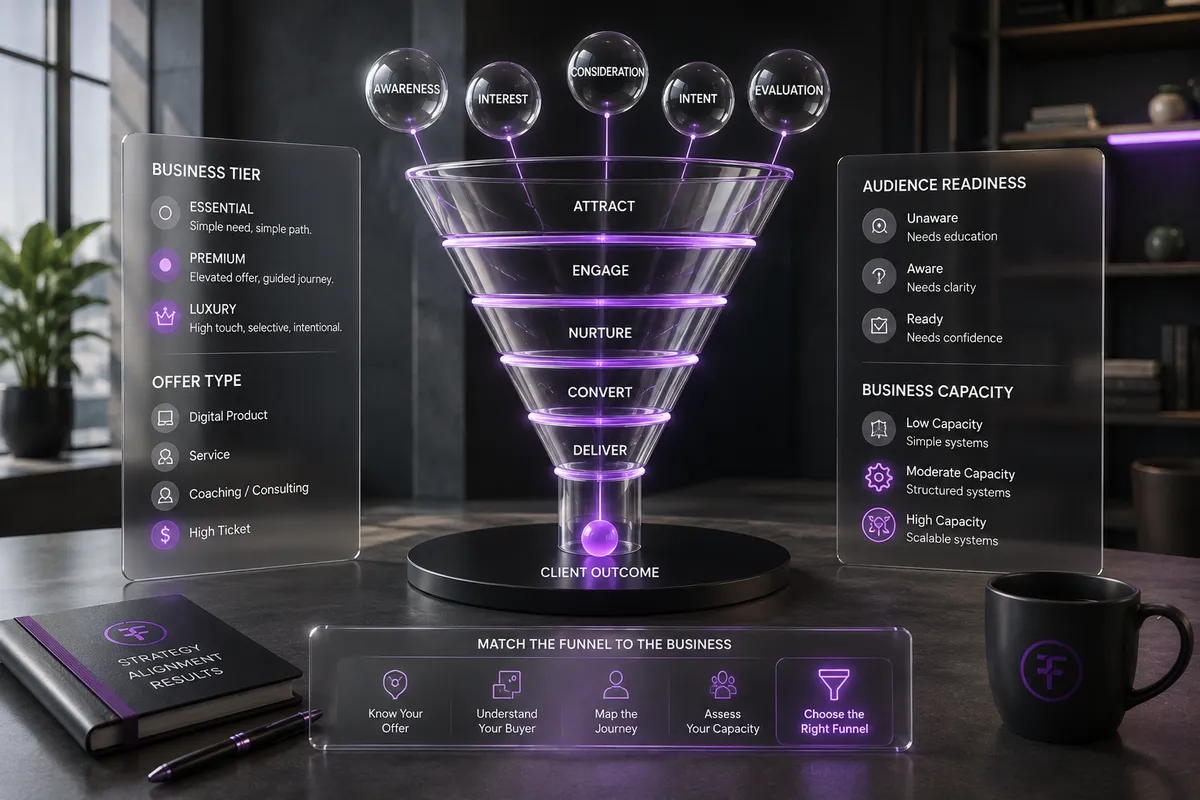
What Type of Funnel Matches Your Actual Business Tier
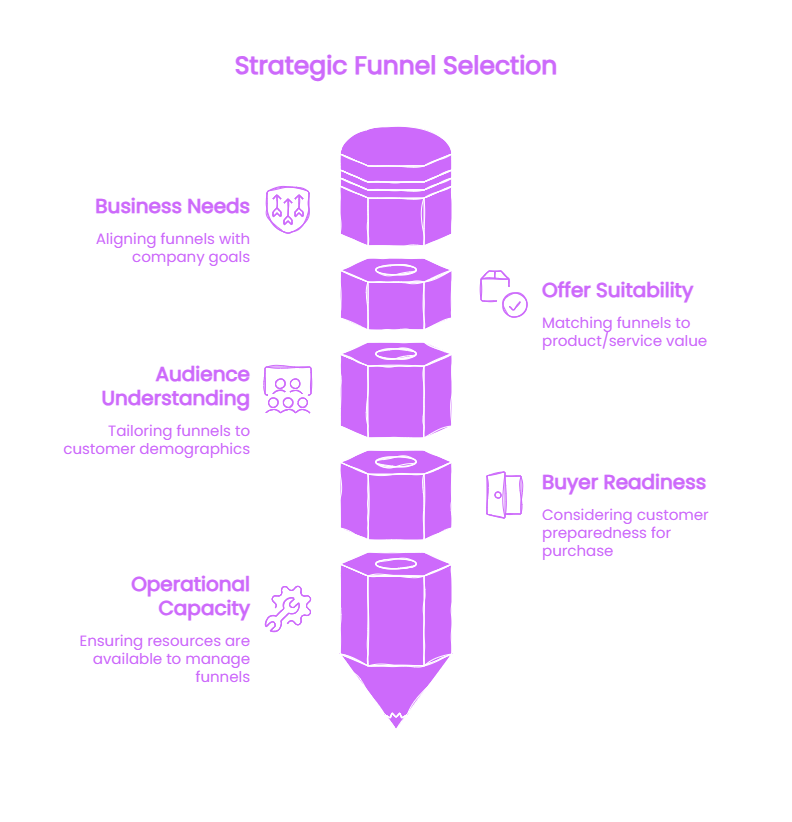
Businesses often choose funnels by looking outward. They see another business using a webinar funnel and assume a webinar must be the next move. They hear that application funnels are effective for high ticket offers and immediately begin building an application process. They hear terms like “evergreen,” “high ticket,” “luxury,” or “automated” and treat the label as though it already contains the answer. The problem is that a funnel type does not determine its own appropriateness. The right architecture depends on the relationship between the business, the offer, the audience, the buyer's readiness, and the capacity available to operate the journey. A funnel that works beautifully for one business can create unnecessary friction for another because the conditions behind the funnel are different. Funnel selection therefore needs to begin with the business rather than the trend.
Business Tier Is More Than Price
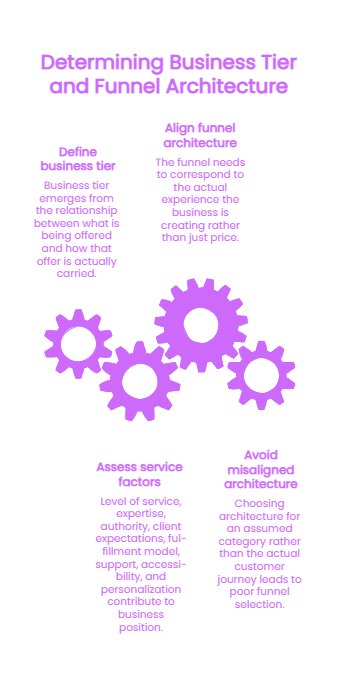
Business tier is often reduced to price because price is easy to see. A business charges $5,000, so it must be high ticket. An offer costs $500, so it must belong to a different category. A service carries a premium price, so the business assumes its entire customer journey should immediately resemble every other premium business. Price can certainly contribute to how an offer is positioned, but it does not establish the entire tier by itself. The level of service, degree of expertise, authority, client expectations, fulfillment model, operational support, accessibility, personalization, and overall experience all contribute to the position a business occupies. The business tier therefore emerges from the relationship between what is being offered and how that offer is actually carried.
This matters because funnel architecture inherits those conditions. A business offering a relatively straightforward service with a direct decision process may not benefit from an elaborate funnel simply because the price has increased. A business with a highly specialized offer, substantial investment level, selective intake, and significant client involvement may require more deliberate qualification and progression. Another business may have a premium offer but serve an audience that already understands the problem and the provider's authority, making a shorter path more appropriate. The funnel needs to correspond to the actual experience the business is creating. When price becomes the only classification variable, the business can end up choosing architecture for a category it assumes it belongs to rather than for the customer journey it actually needs to govern.
Funnel Type Follows Function
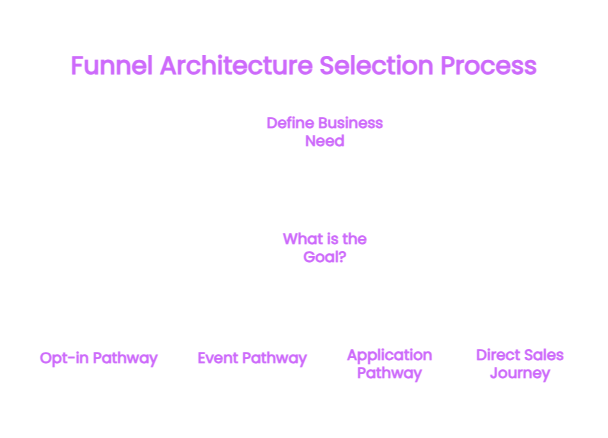
Different funnel types exist because different customer journeys require different forms of movement. An opt in pathway is designed to create an exchange around information, access, or another initial point of engagement. An event pathway creates a structured environment for education, demonstration, or deeper consideration before a next decision. An application pathway introduces qualification into the journey because the business needs to assess fit before proceeding. A higher investment journey may require stronger authority, more substantial expectation management, more deliberate decision support, or a direct sales conversation. Each architecture exists to perform a particular function within the relationship between the business and the buyer.
This means the funnel type should emerge from what needs to happen rather than from what sounds impressive. If the business needs to introduce a concept and allow someone to experience its value before deciding, the architecture should support that movement. If the business already has established authority with its audience and the offer is sufficiently clear, the journey may require less education and more direct progression. If the business needs information from a prospective client before determining fit, the funnel needs a meaningful qualification mechanism. The technology can build many different configurations, but the technology does not determine which configuration belongs to the business. Function comes first, and the funnel format follows the function.
Audience Readiness Matters
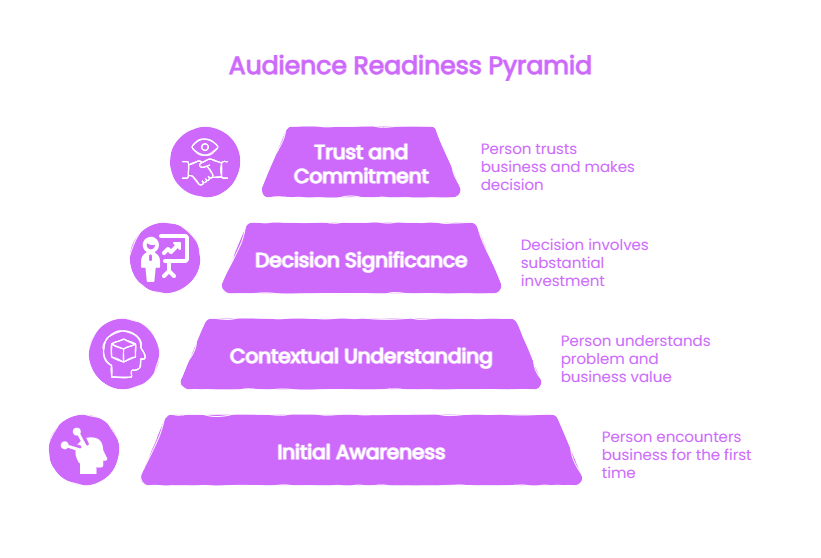
The person entering a funnel brings a particular level of awareness with them. Someone encountering a business for the first time may not understand the problem being addressed, the significance of solving it, or why this particular business is qualified to help. That person may require more context before a meaningful decision can occur. Someone who has followed the business for months, understands its perspective, and already recognizes the value of its work may require substantially less explanation. The difference is not necessarily about intelligence or willingness to buy. It is about how much of the decision context has already been established before the person enters the funnel.
Readiness also changes when the decision itself becomes more significant. A prospective client considering a substantial investment may need a different form of reassurance, qualification, information, or direct interaction than someone making a relatively simple purchase. The funnel needs to account for the distance between where the buyer begins and the decision the business is asking them to make. When that distance is underestimated, the funnel can ask for commitment before sufficient understanding or trust exists. When it is overestimated, the business can create an unnecessarily long journey for people who were already ready to move. Good funnel architecture respects the readiness that actually exists within the audience.
Business Capacity Matters Too
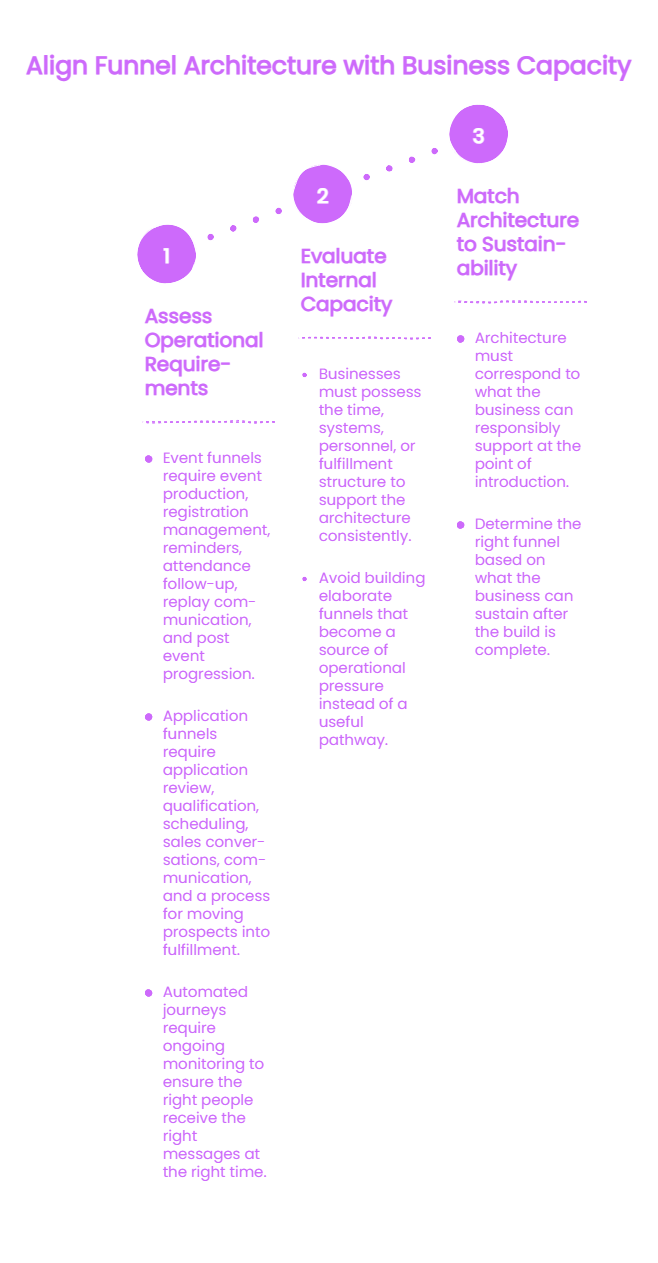
The funnel does not stop functioning when the prospect converts. Every architecture creates responsibilities that continue into the business's operating environment. An event funnel may require consistent event production, registration management, reminders, attendance follow-up, replay communication, and post event progression. An application funnel may require application review, qualification, scheduling, sales conversations, communication, and a reliable process for moving accepted prospects into fulfillment. A highly segmented automated journey may require ongoing monitoring to ensure the right people receive the right messages at the right time. The funnel therefore creates operational requirements alongside marketing requirements.
Capacity becomes part of funnel selection because the business has to carry what the architecture creates. A business can technically build an elaborate funnel while lacking the time, systems, personnel, or fulfillment structure required to support it consistently. When that happens, the funnel becomes another source of operational pressure rather than a useful pathway into the offer. This does not mean businesses should avoid sophisticated architecture while they grow. It means the architecture needs to correspond to what the business can responsibly support at the point where it is being introduced. The right funnel is partly determined by what the business can sustain after the build is complete.
When the Funnel and Tier Are Misaligned
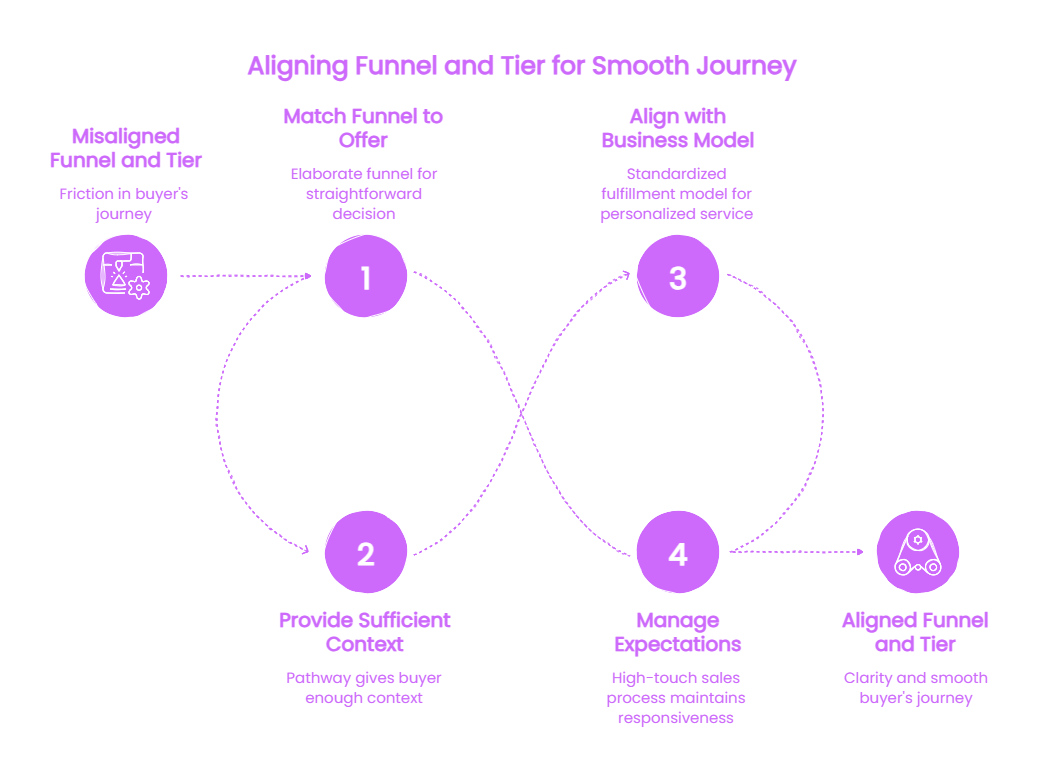
Misalignment often becomes visible through the experience of the journey itself. The funnel may feel more elaborate than the offer requires, with multiple steps separating a buyer from a relatively straightforward decision. The audience may be asked to attend an event, complete a long sequence, or move through several qualification stages when the underlying offer does not require that level of progression. The opposite can happen as well, with a significant offer presented through a pathway that gives the buyer too little context or opportunity to establish confidence. In either direction, the architecture is creating movement that does not correspond appropriately to the business.
Misalignment can also appear after the decision has been made. A funnel may attract prospects expecting highly personalized service when the business operates through a standardized fulfillment model. An application process may position an offer as highly selective while the business accepts nearly everyone who enters. A high-touch sales process may create expectations around responsiveness that the backend cannot consistently maintain. These conditions reveal that funnel alignment extends beyond conversion. The funnel has to fit the offer, the buyer's journey, the business's positioning, and the operational reality that receives the person afterward. When those layers disagree, the funnel can create friction precisely where it was intended to create clarity.
Determine the Function Before the Funnel
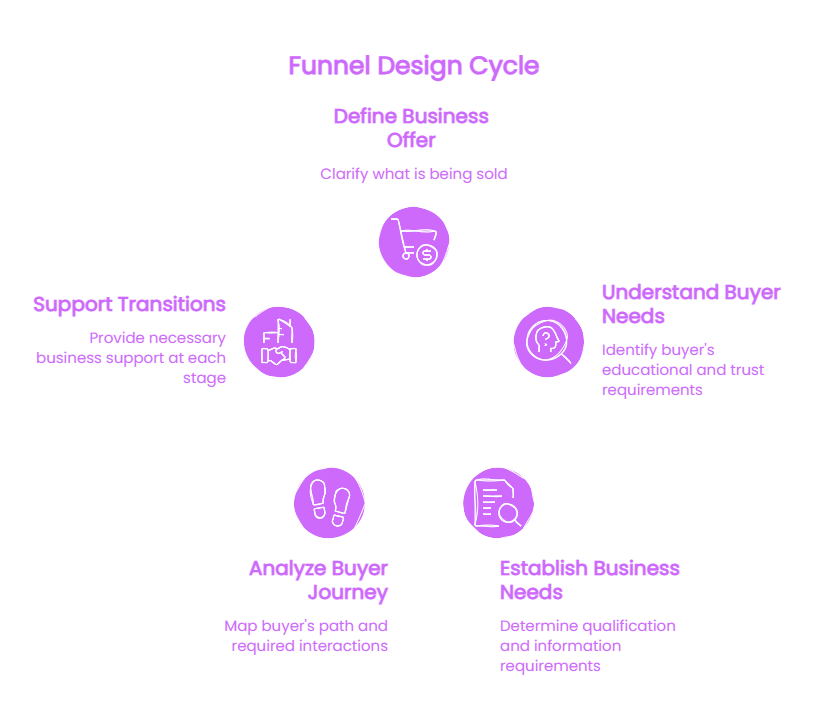
Before choosing a funnel type, begin with three questions. What does the business actually sell? What does the buyer need to understand or experience before deciding? What does the business need to know before accepting or progressing someone? The first question establishes the offer and the actual exchange taking place. The second identifies the level of education, trust, demonstration, consideration, or decision support required by the buyer. The third establishes whether the business needs qualification, information, assessment, or another form of discernment before the relationship moves forward. Together, these questions begin to reveal the function the funnel needs to perform.
Once those answers are clear, examine the movement between the starting point and the desired outcome. Determine whether the person needs education, experience, qualification, direct conversation, a simple transaction, or some combination of these movements. Then consider what the business must support at every meaningful transition. You may discover that the funnel type you originally considered is appropriate, or you may discover that a simpler or different architecture better matches the actual journey. The purpose of this exercise is not to force the business into a predefined funnel category. It is to allow the required function to reveal the architecture.
Start with the function, not the format. Plug Club walks you through what your offer, audience, and capacity actually require, one piece at a time. Start here
In Closing
A funnel is the expression of a business decision about how people should move toward an offer. That decision is shaped by the business's tier, but tier itself is established through more than price. The offer, audience, readiness, authority, experience, fulfillment model, operational support, and available capacity all contribute to the conditions the funnel needs to carry. When those conditions are understood, funnel selection becomes much more precise. The business can choose an architecture because it fits the movement that needs to occur rather than because another business has made that architecture look successful. This creates a stronger relationship between the funnel and the business operating behind it.
The most appropriate funnel will not always be the most elaborate, the most automated, the most expensive to build, or the one currently receiving the most attention in the market. It will be the one that performs the function the business actually requires and creates a journey the audience can meaningfully move through. As the business evolves, its funnel architecture can evolve with it because the underlying business conditions have changed. That is a much stronger foundation for growth than choosing a funnel according to aspiration alone. Choose the journey because you understand the movement it needs to govern, not because the funnel type is currently popular.