What “APIs” Actually Do (And Why You Don’t Need to Understand Them to Scale)
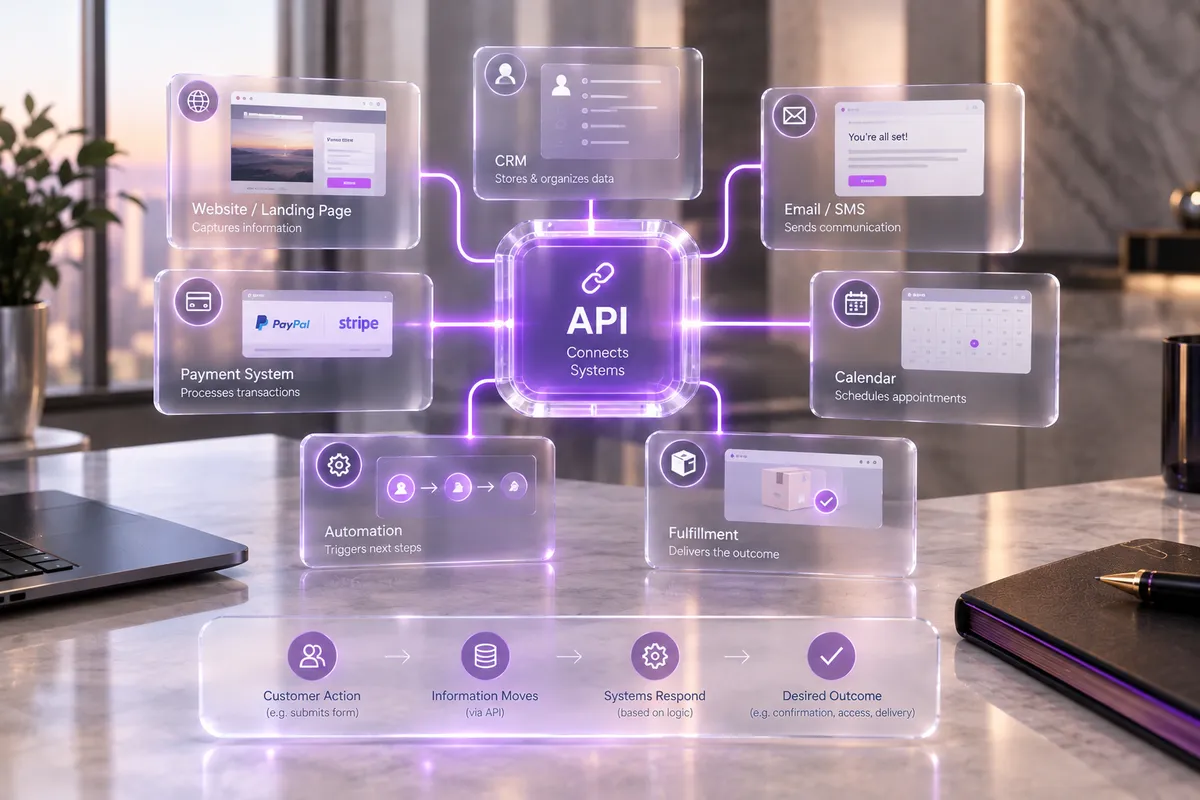
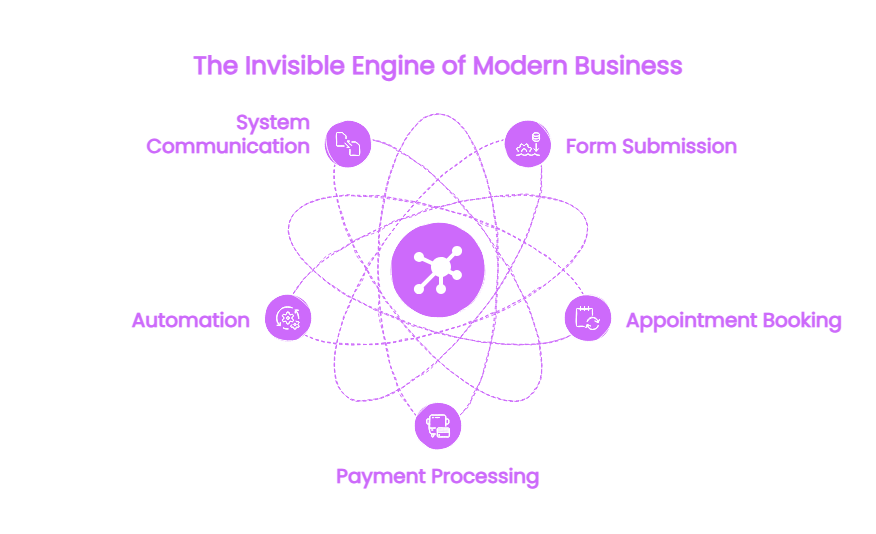
You probably use systems that rely on APIs every day without ever seeing an API. A prospect submits a form and their information appears in a CRM. Someone books an appointment and the event appears on a calendar. A customer makes a payment and another system records the purchase. Someone completes an action and an automation begins without anyone manually moving the information from one platform to another. None of these experiences require the business owner to understand programming in order to use them. Something behind the scenes has to allow those systems to communicate, however, because one platform cannot automatically know what happened inside another unless information is intentionally shared. That communication layer is where APIs become relevant to the way modern funnels and business systems operate.
What an API Actually Does
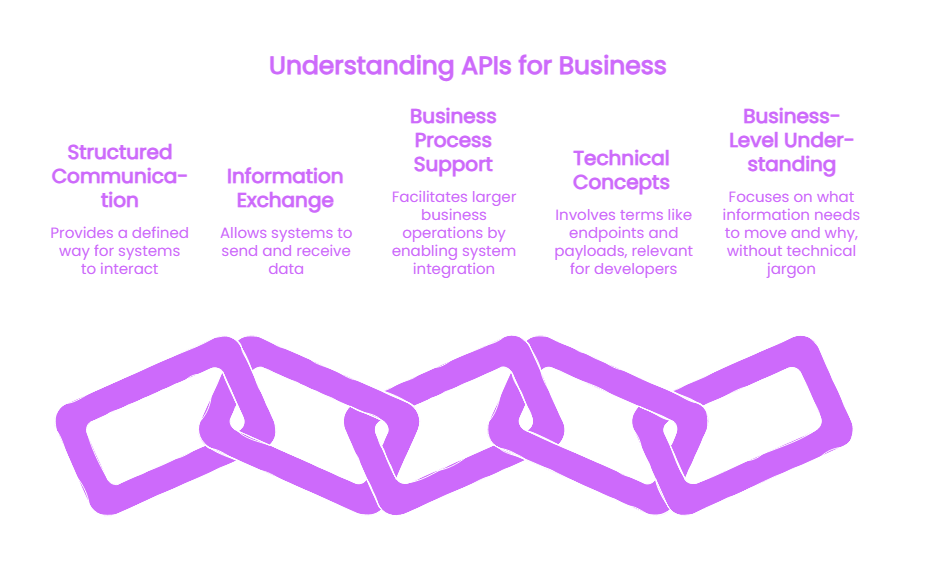
An API, or application programming interface, provides a defined way for one software system to communicate with another. It allows one system to make a structured request or send information that another system can receive and process according to the rules established for that connection. A simple way to understand the movement is System A has information - the API communicates that information - System B receives and uses it. The API is therefore part of the communication mechanism between systems rather than the business process itself. It does not decide what your business should do, what your customer should receive, or which offer someone should purchase. It provides a structured means for software to exchange information so that the systems involved can participate in the larger process.
That distinction matters because APIs can sound much more complicated than the business problem, they help solve. A business owner may hear words such as endpoint, request, response, authentication, payload, or webhook and assume that understanding the technical vocabulary is necessary before they can participate in a systems conversation. Those concepts matter to the people actually building or maintaining the technical connection, but the business owner does not necessarily need to work at that level. The more useful business level question is what information needs to move, where it needs to go, and what should happen once it arrives. That gives the business enough understanding to define the requirement without requiring the owner to become a software engineer. Technical implementation can then translate those requirements into a working connection.
Why Funnels Depend on System Communication
Most modern funnels involve more than one platform. A landing page may collect information through a form, a CRM may store the contact, an email platform may send communication, a payment system may process the transaction, a calendar may manage an appointment, and another system may handle fulfillment or access. The customer experiences one journey even though several technologies may participate in creating it. For that journey to feel connected, relevant information has to move between the systems at the appropriate points. The funnel therefore depends on communication between systems even when the customer never sees that communication happening.
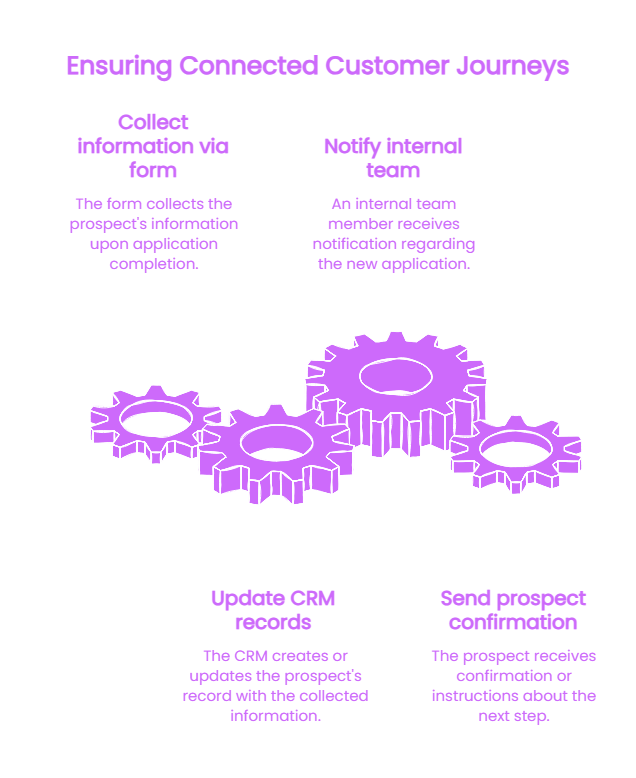
Consider what happens when someone completes an application. The form may collect their information, the CRM may need to create or update their record, an internal team member may need to be notified, and the prospect may need to receive confirmation or instructions about the next step. Each system has a different responsibility, but they are participating in one customer journey. If the information stops at the form, the rest of the journey may depend on someone manually moving it forward. If the information reaches the CRM but the appropriate communication never occurs, the customer may be left waiting. The funnel is therefore only as connected as the systems that support its movement.
APIs Are About Information Movement
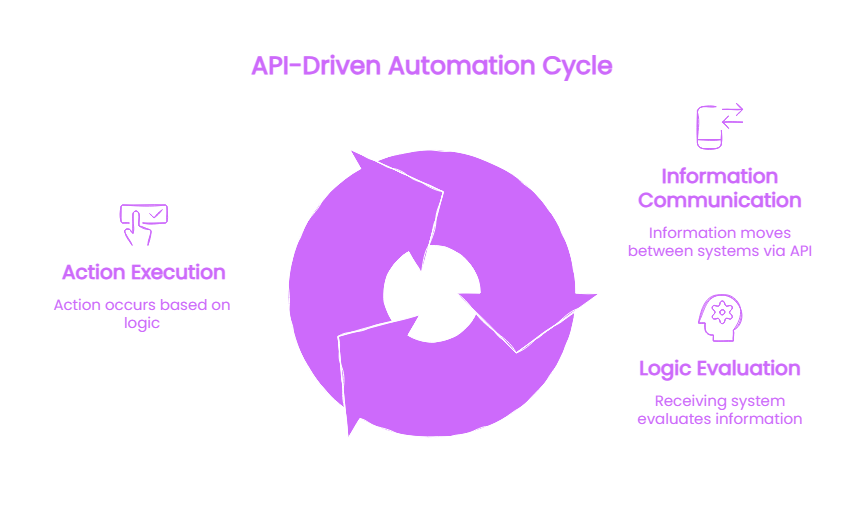
One of the most useful distinctions to understand is that an API is not the same thing as an automation. An automation describes what the business wants the system to do when a particular condition occurs. An API can provide one of the mechanisms through which information required for that automation moves between systems. The relationship can be understood as communication - logic - action. Information needs to communicate from one place to another, the receiving system evaluates that information according to its configured logic, and an action occurs when the relevant conditions have been met.
This distinction becomes especially important when something is not working. A business may say that an automation is broken when the real issue is that the information the automation depends on never arrived. Another system may have completed its part correctly while the receiving system never received the event or received information in a form it could not use. The automation logic may therefore be perfectly configured while the communication layer surrounding it is incomplete. Conversely, the systems may communicate correctly while the automation itself contains the wrong condition or action. Understanding the difference helps a business ask a much better question than simply asking why the automation failed.
What Happens When Systems Cannot Communicate
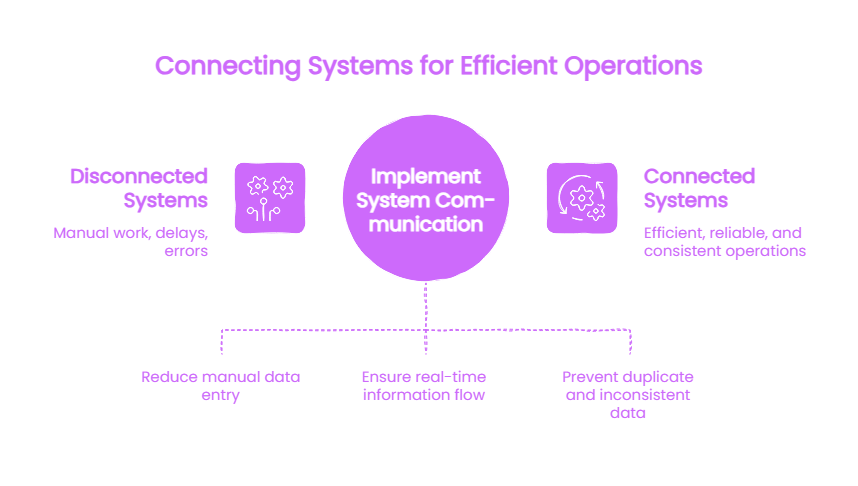
When systems cannot communicate reliably, people often become the connection between them. Someone exports information from one platform and enters it into another. Someone checks whether a payment occurred before granting access. Someone copies appointment details into a separate record. Someone manually sends a message because the expected automation did not fire. These workarounds can keep a business functioning, particularly when volume is low, but they also introduce additional opportunities for delay, duplication, omission, and inconsistency. The human being becomes responsible for carrying information that the business may eventually need its systems to carry.
This is where system communication connects directly to operational weight. Manual work is not automatically a problem because some work intentionally requires human involvement. The problem appears when a person repeatedly performs the same transfer because the surrounding systems have not been connected appropriately. A disconnected customer record can create duplicate information. A delayed payment update can create delayed access. A missing communication event can create unnecessary support requests. The business may experience these issues as separate inconveniences, but they can originate from the same underlying condition. Information is not moving through the environment as the business expects.
Why Integration Does Not Automatically Mean Alignment
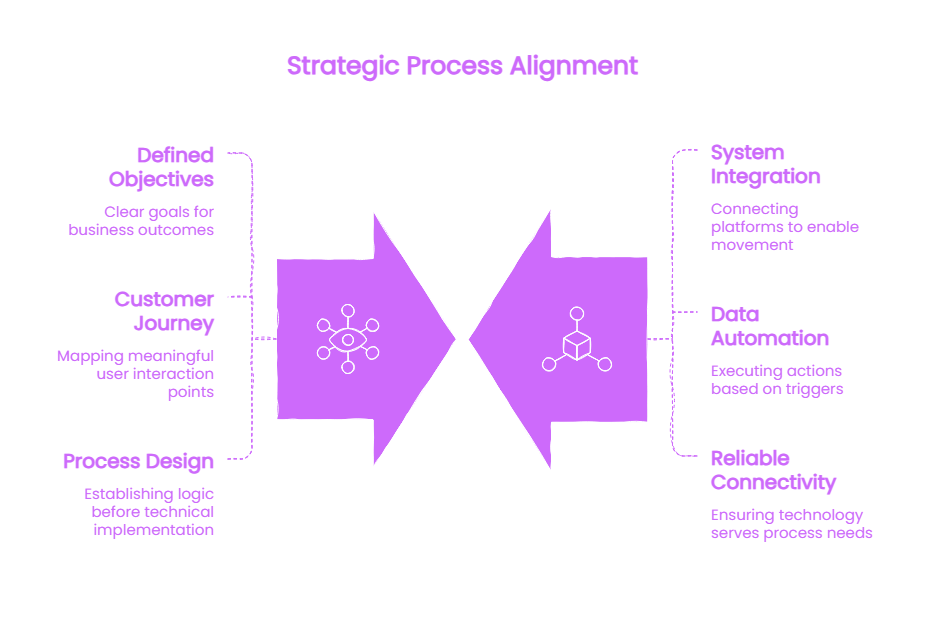
Connecting two systems does not automatically create a good business process. A technically successful integration can move the wrong information, trigger the wrong action, or create an unnecessary pathway just as efficiently as it can support a useful one. The business still needs to determine what information matters and what that information means within the customer journey. If every form submission creates a CRM record but the business has not defined what should happen after that submission, the connection has created data without creating useful movement. If every purchase triggers an email but the email does not correspond to what the customer purchased, the automation may be functioning technically while failing experientially.
This is why infrastructure should follow defined business requirements rather than technology enthusiasm. The presence of an integration does not prove that the underlying process is well designed. The business needs to establish the desired movement first and then determine which systems need to participate. Once the movement is understood, technical connections can be evaluated according to whether they support that movement reliably. This keeps the technology in its proper role. The systems serve the business process; the business process should not exist merely because the technology makes it possible.
Why You Don’t Need to Become Technical
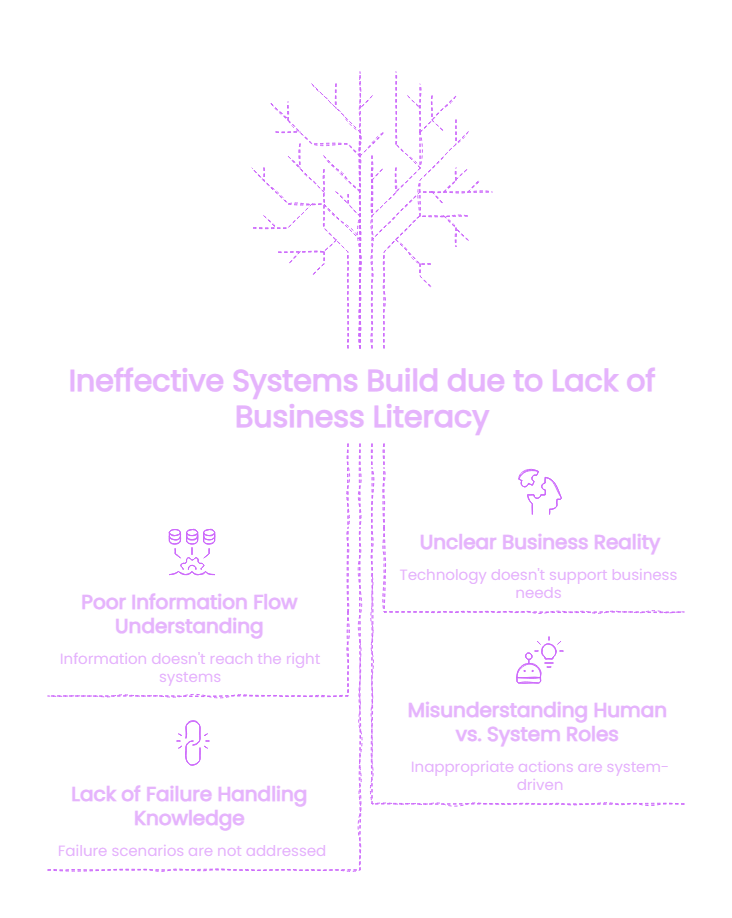
A business owner does not need to write code to participate intelligently in a systems build. They do need enough structural literacy to describe the business reality the technology is supposed to support. You should be able to identify which systems are involved, what information enters the process, where that information needs to go, what should happen when it arrives, and what should happen when something fails. You should also understand which parts of the process require human judgment, and which parts are appropriate for system driven action. Those questions give a technical implementer meaningful requirements to work from.
This distinction can also protect business owners from approving systems they do not actually understand. You do not need to know how an API request is technically constructed to ask whether the right customer information reaches the right system at the right time. You do not need to understand the underlying code to ask what happens when the connection fails. You do not need to build the integration yourself to determine whether the resulting customer experience matches the business's intended process. Technical literacy at the business level is therefore less about knowing how to build the machinery and more about knowing what the machinery needs to accomplish. That is enough understanding to make better decisions about infrastructure as the business grows.
Map Your Information Movement
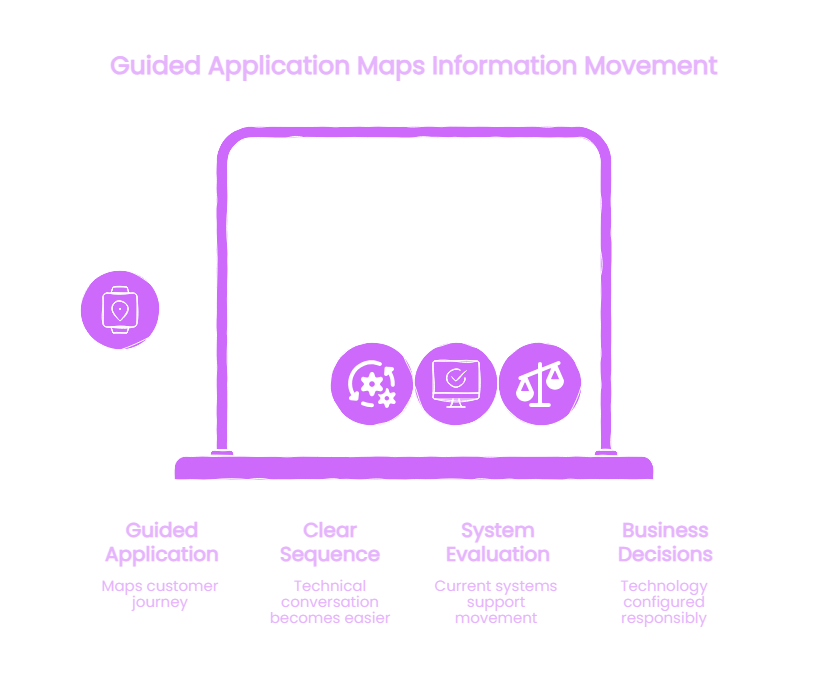
Choose one customer journey and map the information that moves through it. Start with the first meaningful event, such as a form submission, appointment booking, purchase, or application. Identify what information is created at that moment and determine where that information needs to go next. Then ask what system receives it, what that system is supposed to do with it, and what action should occur afterward. Continue following the information until you reach the intended customer outcome. The goal is to see the journey as information movement rather than as a collection of disconnected software tools.
Then examine the places where a person currently has to step in and carry information manually. Ask whether that human involvement is intentional or whether it exists because two systems do not communicate, because the business has not defined the next condition, or because the process has never been fully established. Look for duplicate entry, delayed updates, repeated checking, inconsistent records, and information that disappears between stages. Do not begin by asking which integration tool you should purchase. Begin by asking what information needs to move and what the business needs that movement to accomplish.
A useful sequence to document is:
What information enters? - Where does it go? - What system receives it? - What action should happen? - What happens next?
Once that sequence is clear, the technical conversation becomes much easier. You can evaluate whether the current systems can support the movement, whether an existing integration is sufficient, or whether a different configuration is needed. You can also identify where the business itself needs to make a decision before technology can responsibly be configured. The map gives you a picture of the process before you start changing the machinery. That is valuable because infrastructure becomes much easier to build when the movement it needs to support has already been established.
Closing
APIs can sound like highly technical infrastructure, but their business level function is straightforward. hey help software systems communicate in structured ways. That communication allows information to move between the tools participating in a customer's journey. The API does not replace strategy, define the customer journey, or decide what the business should do with the information it receives. It supports the communication required for the systems to participate in a process that the business has already defined. When those connections are reliable, the business can reduce unnecessary manual transfer and create more consistent movement between systems.
You do not need to understand every technical layer to build a business that uses technology well. You need to understand the movement your business requires and be able to recognize whether the systems are carrying that movement reliably. As the business grows, that understanding becomes increasingly valuable because more volume places more demand on every connection. Scale requires systems that can communicate reliably, not an owner who personally understands every technical layer.