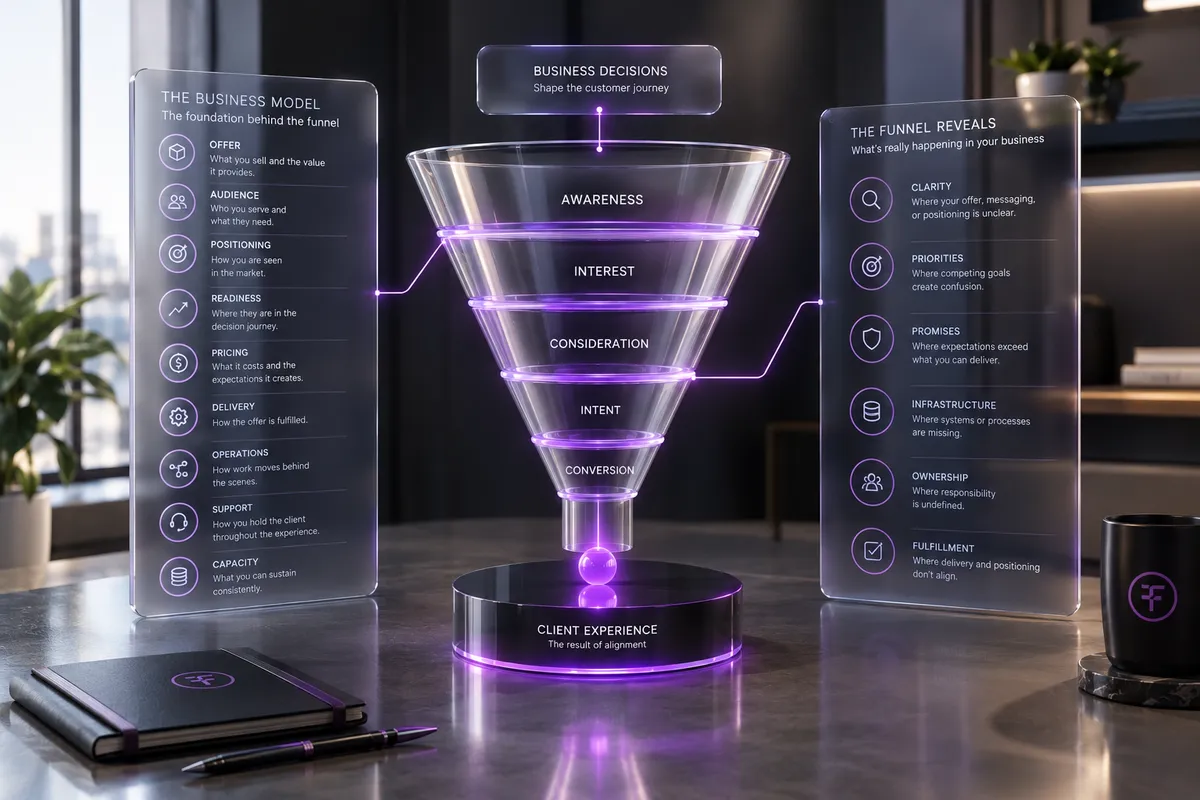
How Funnels Expose the Truth About Your Business Model
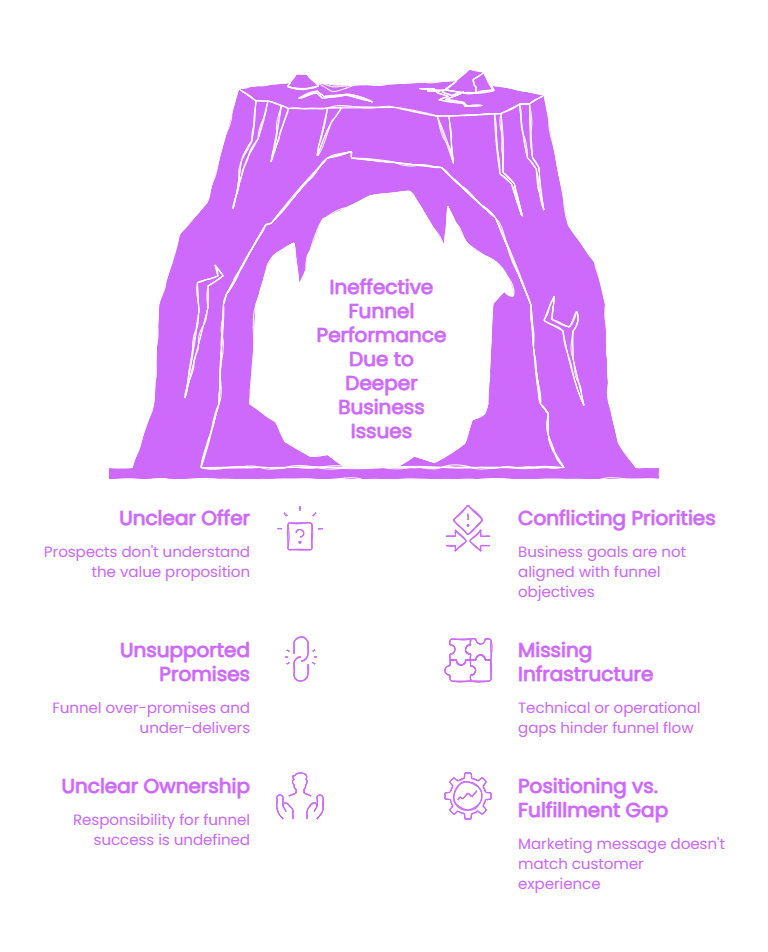
Businesses often think they are examining their funnel when the funnel is actually revealing the business. They look at a conversion rate, a landing page, an automation sequence, or a drop off point and begin searching for something to fix inside the funnel itself. They may change the copy, adjust the design, add another email, introduce a new offer, or create another path for the prospect to take. Yet the issue they are encountering may have been established long before the funnel was built. The funnel can expose an unclear offer, conflicting priorities, unsupported promises, missing infrastructure, unclear ownership, or a gap between positioning and fulfillment. What appears to be a funnel problem can therefore become evidence of something happening deeper within the business. When you learn to read the funnel this way, the funnel becomes more than a marketing mechanism; it becomes a source of information about the business model itself.
The Funnel as a Business Model Expression
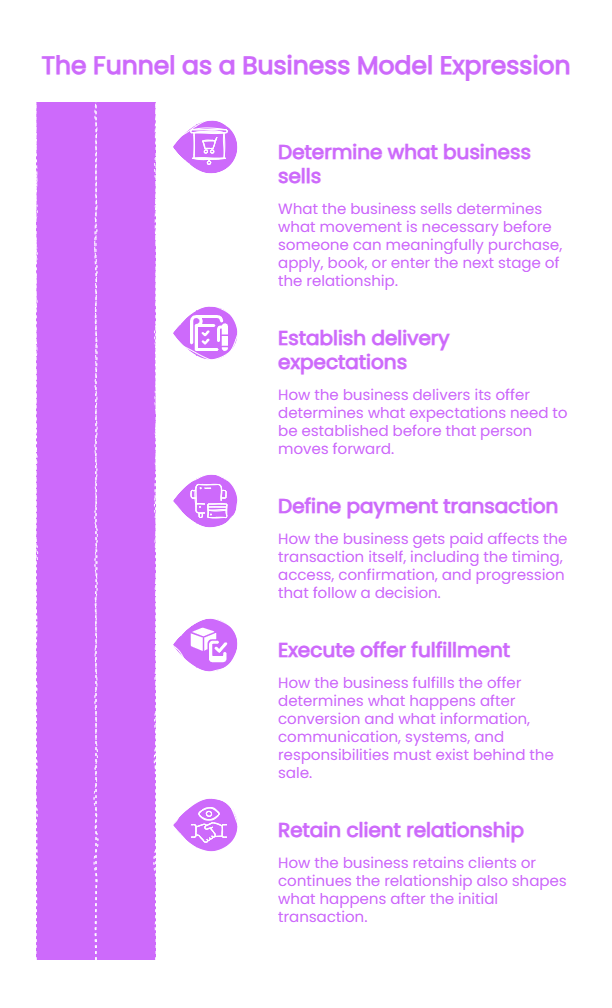
A funnel operates downstream from the decisions that make up a business model. What the business sells determines what movement is necessary before someone can meaningfully purchase, apply, book, or enter the next stage of the relationship. How the business delivers its offer determines what expectations need to be established before that person moves forward. How the business gets paid affects the transaction itself, including the timing, access, confirmation, and progression that follow a decision. How the business fulfills the offer determines what happens after conversion and what information, communication, systems, and responsibilities must exist behind the sale. How the business retains clients or continues the relationship also shapes what happens after the initial transaction. The funnel gives those underlying decisions a visible pathway through which a prospect can move.
This is why funnel architecture carries more information than its pages and automations may suggest. A funnel has to translate the business model into movement that another person can actually experience. If the offer requires qualification, the funnel has to create an appropriate point for qualification. If the offer requires education before a decision, the funnel has to create room for that education. If fulfillment begins immediately after payment, the transition from purchase into delivery needs to be supported. If the business depends on a high touch relationship, the funnel has to establish a journey capable of carrying that level of interaction. Every one of these requirements comes from something that already exists within the business. The funnel therefore expresses the business model through the sequence, decisions, expectations, and responsibilities it creates.
What an Unclear Funnel Can Reveal
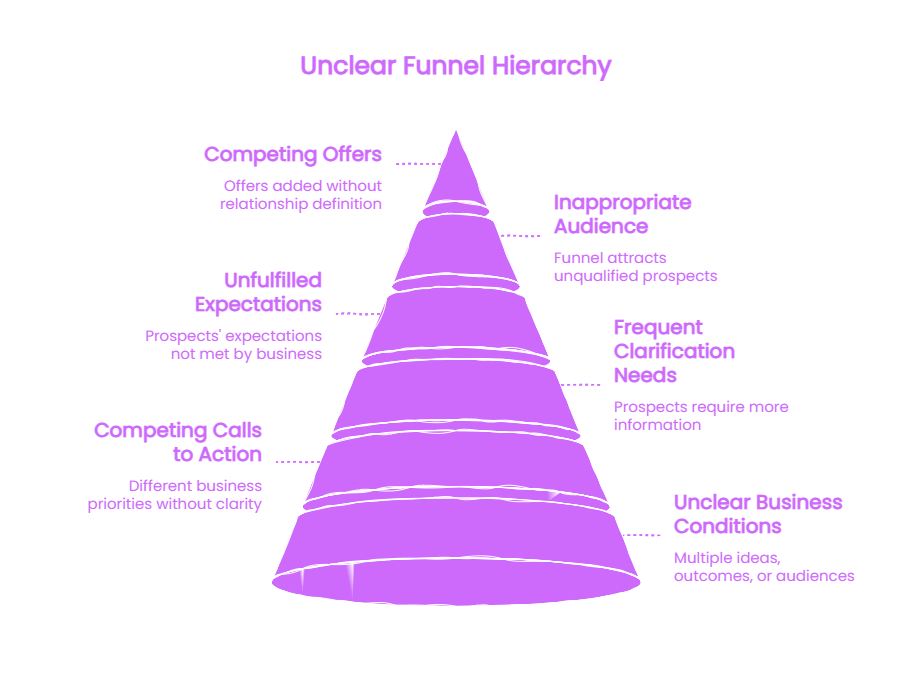
An unclear funnel often begins with an unclear business condition. When the pathway is difficult to explain, the offer itself may contain multiple ideas, outcomes, audiences, or forms of value that have not been sufficiently organized. When a prospect cannot easily understand what they are being invited into, adding more copy may create more information without creating more clarity. The same pattern can appear when the funnel contains several competing calls to action that each represent a different business priority. The funnel then becomes difficult to navigate because the business has not established which movement matters most. The problem is not necessarily that the funnel needs better design. The funnel may simply be accurately carrying a business that has not yet decided what it wants the customer journey to accomplish.
The same principle applies when prospects repeatedly need clarification before they can move forward. Frequent questions can provide useful information about what the audience needs, but they can also reveal underdeveloped positioning, incomplete messaging, or an offer whose value has not been clearly articulated. If prospects consistently arrive with expectations the business cannot fulfill, the issue may extend into qualification and positioning. If the funnel attracts people the business is not equipped to serve, the audience definition or entry criteria may require greater precision. If several paths exist because the business keeps adding offers without establishing their relationship to one another, the funnel may be carrying competing priorities rather than creating meaningful choice. These patterns matter because they show where the business model is asking the funnel to carry unresolved decisions. The funnel gives those decisions somewhere to become visible.
What a High Maintenance Funnel Can Reveal
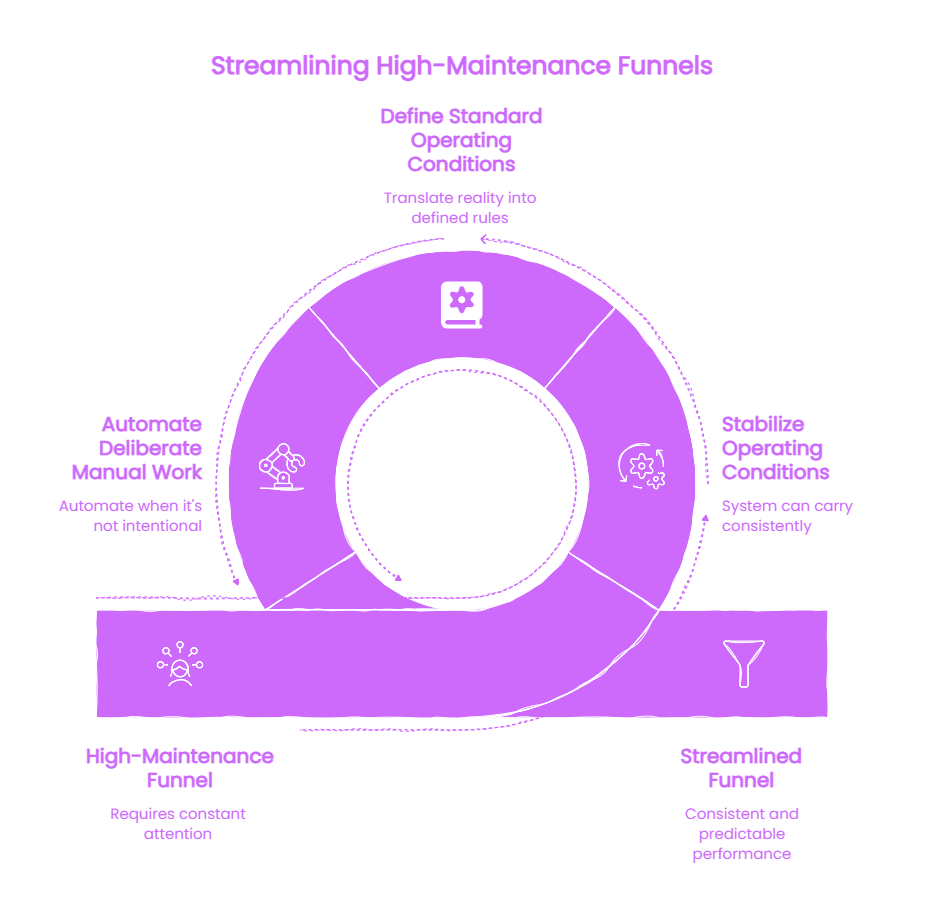
A funnel that requires constant attention can reveal more than a poorly configured automation. As discussed in the previous article, recurring maintenance is information about the conditions surrounding the funnel. When offers change frequently, messaging has to be repeatedly rewritten, automations require continual exceptions, or manual intervention becomes part of ordinary operation, the business may be carrying complexity that has not been fully defined. The funnel has to respond to every change because the underlying operating conditions have not yet become stable enough for the system to carry them consistently. What feels like excessive funnel maintenance may therefore be evidence of business-model complexity upstream. The funnel is responding to what the business has given it.
Manual work can reveal a different kind of structural condition. When a person repeatedly has to move information, check the same conditions, send the same communication, or correct the same pathway, the business may have a missing system or an undefined responsibility. Repeated exceptions can also indicate that the business has never formally established its standard operating conditions. The funnel then becomes dependent on human interpretation because the business has not translated enough of its operating reality into defined rules, ownership, or infrastructure. This does not mean every manual action should be automated. Some forms of human involvement are intentional and valuable, particularly when discernment or relationship is part of the service. The important question is whether the manual work represents a deliberate business choice or compensates for something the business has not yet defined.
What Conversion Data Can and Cannot Tell You
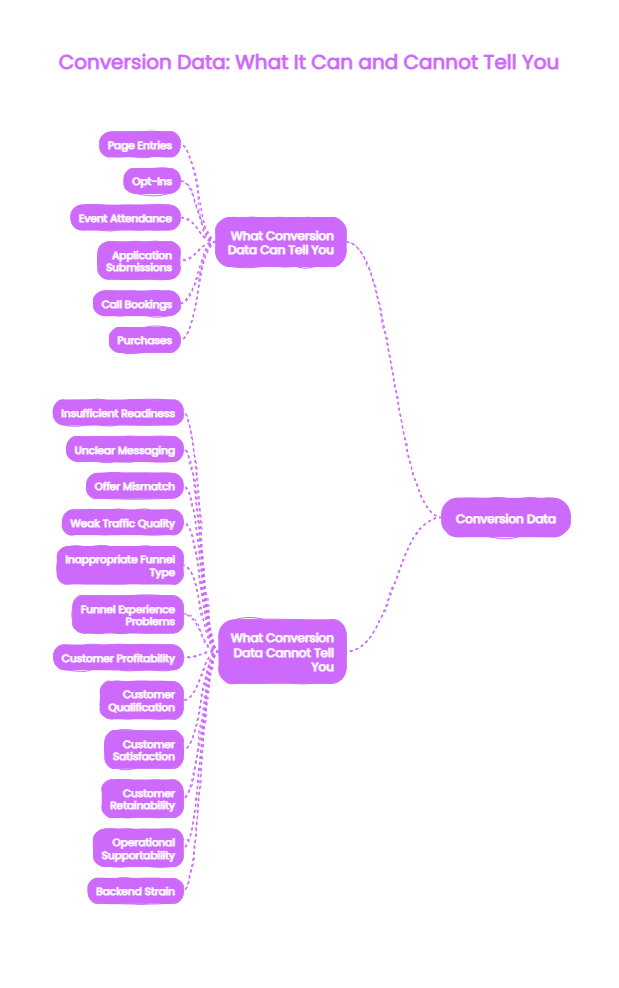
Conversion data can tell you what happened within a particular part of the journey. It can show how many people entered a page, how many opted in, how many attended an event, how many applications were submitted, how many calls were booked, or how many purchases occurred. These measurements can help identify where movement increased, decreased, stopped, or changed. They provide evidence about observed behavior within the funnel. What they do not automatically provide is the reason that behavior occurred. A low conversion rate can indicate many different conditions, including insufficient readiness, unclear messaging, an offer mismatch, weak traffic quality, an inappropriate funnel type, or a genuine problem within the funnel experience itself.
The same distinction matters when performance looks strong. A high conversion rate can demonstrate that people are moving through a particular pathway, but it does not establish that the resulting customers are profitable, well qualified, satisfied, retainable, or operationally supportable. A funnel can convert efficiently while attracting the wrong audience or creating expectations that fulfillment cannot consistently meet. It can also generate strong front end numbers while placing substantial strain on the backend. Conversion is therefore meaningful evidence, but it belongs inside a larger interpretation of business performance. The goal is not to disregard funnel data. The goal is to read it alongside the business conditions that give the data meaning.
The Business Model Beneath the Funnel
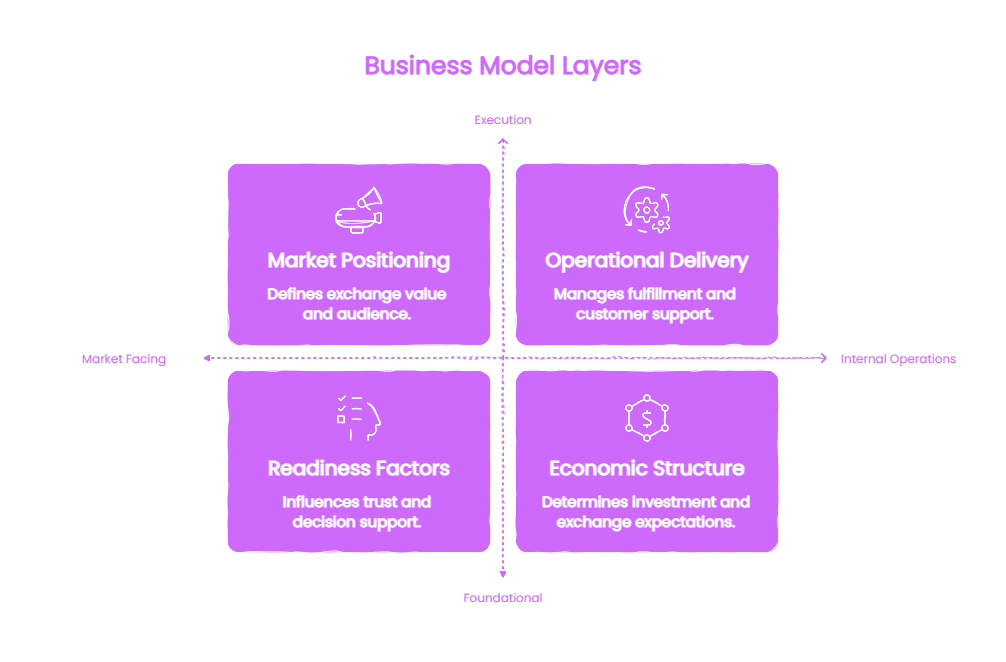
The business model beneath a funnel is made up of interconnected conditions. The offer establishes what is being exchanged and the value the business intends to provide. The audience establishes who the business is designed to serve and what those people may require before they can make a meaningful decision. Positioning establishes how the business occupies its place in the market and what expectations are created around its expertise, experience, and value. Readiness influences how much movement, education, trust, qualification, or decision support may be necessary before conversion. Pricing contributes to the economic structure of the exchange and the expectations surrounding the level of investment.
Delivery, operations, support, and capacity complete the picture because the business has to carry what the funnel promises. Delivery determines how the purchased outcome is produced. Operations determine how information, responsibilities, communication, systems, and workflows move around that delivery. Support determines how the customer is held throughout the experience. Capacity determines how consistently the business can sustain the entire structure as demand changes. These elements do not sit outside the funnel as unrelated business concerns. They establish the conditions the funnel has to represent and support. When the funnel is evaluated without considering these layers, the business can spend considerable effort optimizing an expression of a model it has never fully examined.
Read Your Funnel Backward
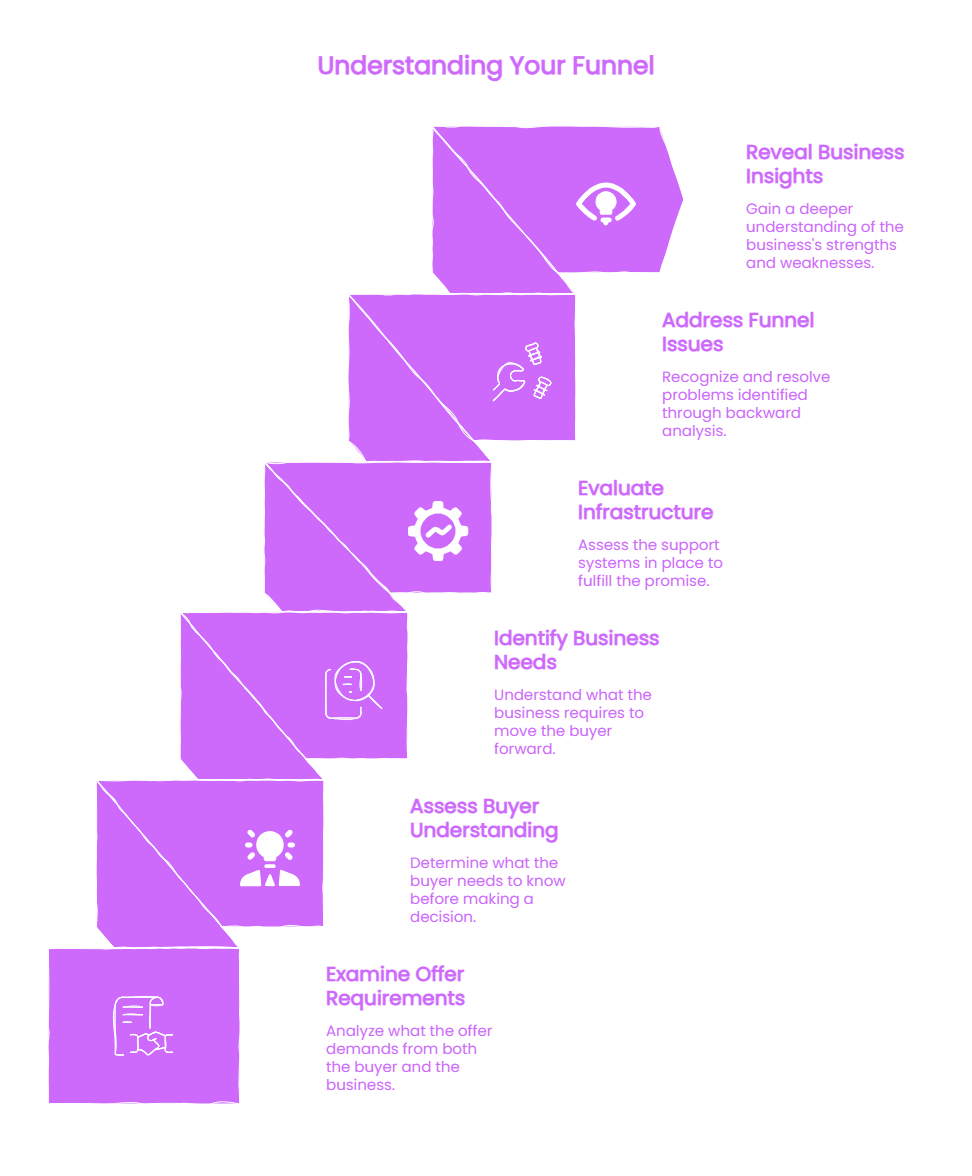
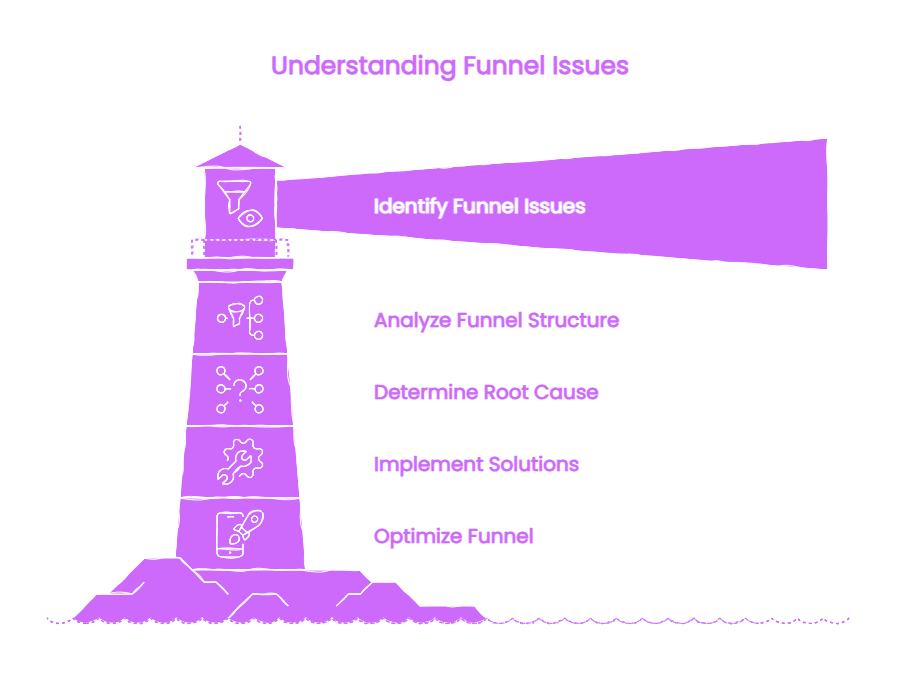
Instead of beginning with the question, “How do I improve this funnel?” begin with the funnel itself and move backward into the business. Look at the pathway you have built and ask what the funnel assumes must already be true for this journey to work. Consider what the offer requires from the buyer, what the offer requires from the business, and what must be understood before the person can make the decision you are asking them to make. Examine what the business needs to know about the person before moving them forward. Then look behind the pathway and identify the infrastructure that supports the promise once the person converts. This backward reading allows the funnel to become a diagnostic surface rather than simply a performance object.
As you move backward, pay attention to what the funnel is carrying that has never been formally addressed. You may find that a messaging problem points toward an offer decision, that a qualification problem points toward audience definition, or that repeated manual work points toward an operational requirement. You may discover that the funnel is carrying multiple priorities because the business has several offers that have never been given clear relationships to one another. You may also discover that the funnel is creating expectations that the current delivery model cannot consistently support. Rather than immediately changing the funnel, name what the funnel is revealing and trace that evidence to the business condition beneath it. Then ask the larger question what is my funnel revealing about my business that I have not yet formally addressed?
The Funnel Is Evidence
A funnel can reveal the degree of clarity present in an offer, the maturity of a customer journey, the strength of positioning, the readiness of an audience, and the capacity of the business behind the experience. It can reveal where decisions have been made and where decisions are still being carried forward as assumptions. It can show whether the business has established the infrastructure required to support what it promises. It can also reveal where the business has created complexity, responsibility, or expectation without establishing the corresponding systems to carry it. These revelations are valuable because they give the business observable evidence instead of requiring every structural condition to remain invisible. The funnel becomes one of the places where the business can see itself operating.
This does not mean every funnel issue should be traced into a deep business-model problem. Some problems genuinely belong to the funnel and should be corrected at the funnel level. The value of structural reading comes from knowing when the funnel is expressing something larger than itself. A broken link, incorrect automation, confusing page, or technical configuration can require a direct funnel correction. An unclear offer, unsupported promise, recurring exception, or persistent qualification problem may require examination farther upstream. The distinction determines whether the business corrects the right layer or repeatedly treats the visible symptom. Reading the funnel structurally gives the business a better way to determine where the actual work belongs.
Closing
The funnel is one of the clearest places where a business model becomes visible through movement. It takes the decisions surrounding the offer, audience, positioning, readiness, pricing, delivery, operations, support, and capacity and turns them into a journey another person can experience. When those conditions are coherent, the funnel can carry them with greater clarity and consistency. When those conditions are unresolved, the funnel often gives that uncertainty somewhere to appear. The resulting friction may show up as confusing pathways, excessive maintenance, poor fit leads, unexpected questions, unsupported expectations, or performance that cannot be understood through conversion data alone. The funnel does not create every one of these conditions, but it can make them visible.
This is why funnel alignment ultimately becomes business alignment. The work moves beyond asking whether a page looks right, whether an automation fires correctly, or whether a conversion rate has improved. It asks whether the pathway accurately expresses what the business sells, who it serves, how the relationship should progress, and what the business is prepared to carry after the decision is made. A funnel can therefore become a remarkably useful source of business intelligence when it is read with enough context. When you learn to read the funnel structurally, you stop asking only whether the funnel is working and begin understanding what the funnel is telling you about the business.
Your funnel has been telling you about your business the whole time, the offer, the audience, the readiness, the capacity to deliver on what you promise. Plug Club is where you bring that evidence and build the model behind it, instead of reading the signs alone. Join Plug Club